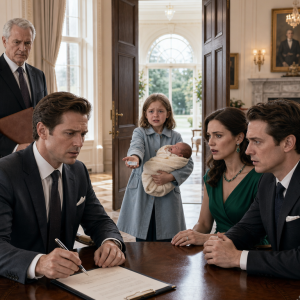
I never imagined my own son would be the one to trap me.
But on a stormy Thursday evening in Rainford, Washington, the heavy slam of our basement door echoed through my chest like a betrayal I could barely breathe through.
My husband, Samuel, and I had followed our son Lucas downstairs after he insisted a pipe was leaking. The moment we stepped past the railing, I heard the lock click.
Silence.
Then footsteps—hers.
My daughter-in-law, Tessa, walked away with the brisk confidence of someone who had finally carried out a plan she’d rehearsed.
Lucas followed, slower, hesitant—but he didn’t stop her. My hands shook as I touched the cold basement wall.
Beside me, Samuel rested a steady palm on my arm and whispered: “Stay quiet, Nora. They don’t know what’s behind this wall.”
He wasn’t panicked. He was prepared. And that frightened me more than the trap we were in.
Standing in the dim light, memories crashed through me—Lucas learning to ride a bike, crying when he lost his first tooth, the boy who once hugged me after every school day. How had that child become someone capable of this?
The warning signs had been creeping in for months. Whispered conversations that stopped when I walked past.
Financial papers suddenly missing.
My husband’s medication arriving in bottles we hadn’t ordered—“Don’t worry about it,” they’d insisted. At the time, it sounded caring. Now it felt like a warning we’d ignored.
But the most telling moment was the legal envelope I found—our names crossed out, a power-of-attorney form already printed with Lucas’s signature, waiting for ours.
I confronted Samuel, expecting shock, but he only said quietly, “I knew something like this might happen.”
He didn’t explain why.
Now, locked in our own basement, the answers finally surfaced. Samuel knelt beside the far wall, his hands moving with unsettling certainty.

His fingers paused on a single uneven brick I’d never noticed. Behind it was darkness—and inside that darkness, a metal box.
When he opened it with a tiny key hidden behind his wedding ring, I stared. Property deeds, our original will, untouched bank statements—and a small recorder.
“Samuel… how long have you had this?”
“For nearly forty years,” he said softly. “Just in case someone tried to take what’s ours. I just never thought it would be our own son.”
He hit play.
Tessa’s cold voice filled the basement: “Once they’re out, the house is ours. We get the signatures, move them out quietly, then everything’s in our hands.”
Lucas’s voice followed, wavering but complicit.
Hearing it stole the breath from my lungs. But grief quickly sharpened into resolve.