Part 1 — A Celebration Built for Appearances
Three hours before our fifth-anniversary dinner, my husband studied his reflection in the bedroom mirror and delivered a warning about my parents as casually as he adjusted his cuff links.
“If they insist on wearing those bargain-store clothes, seat them behind the floral columns,” he said. “Several dealership investors are attending, and I refuse to let your parents make the evening look like a factory reunion.”
At thirty-five, I had spent nine years building Monroe House Events, a luxury event-planning company in Atlanta that managed corporate galas, museum fundraisers, and elaborate weddings. My husband, Cameron Price, was thirty-seven and worked as sales director at an exotic-car dealership in Buckhead. He could sell a six-figure automobile with a warm handshake, a confidential smile, and precisely enough flattery to make wealthy customers feel uniquely understood.
We had been married almost five years and lived in a glass-walled condominium Cameron inherited from his father. Our photographs suggested effortless prosperity, although I paid for considerably more of it than anyone realized. Cameron treated every expensive object as evidence of his superiority, from his leased Range Rover to his designer watch.
My parents, Harold and June Bennett, had retired after spending more than three decades on an appliance-factory assembly line in Marietta. Their modest ranch house had faded shutters and a vegetable garden. Nevertheless, they had paid my college tuition without leaving me burdened by student loans, even when doing so required night shifts and postponed repairs.
Cameron called their life a failure of imagination. His mother, Lenora Price, transformed the same contempt into polished insults delivered over expensive wine.
“June has remarkably good skin for someone who spent her life beneath fluorescent factory lights,” Lenora once observed. “Perhaps avoiding serious social responsibilities preserves a person.”
I had excused those remarks for years because confrontation always became another accusation that I was oversensitive. However, Cameron’s request to hide my parents at our anniversary dinner left an uneasiness that even my practiced patience could not settle.
The celebration would occupy an exclusive hotel ballroom near Peachtree Street. Cameron had chosen a twelve-piece band, imported champagne, and a guest list crowded with dealership clients, executives, and country-club members. He described the dinner as a tribute to our marriage, but every decision advertised his status.
Three days before the party, he arrived at my office without an appointment and closed the door behind him. His complexion looked pale, while his usual confidence had been replaced by carefully measured panic.
“I need you to help me protect the largest commercial sale our dealership has handled this year,” he began. “A hotel group ordered an executive fleet, but the financing partner imposed an emergency performance deposit. If we cannot cover it today, the contract disappears and my entire division takes the blame.”
I asked why a corporate dealership expected its employee to provide personal funds. Cameron sighed with the weary superiority he used whenever questions threatened his stories.
“Senior executives sometimes demonstrate commitment before accounting catches up, which is how serious business operates,” he replied. “I receive the deposit back next month, together with a commission large enough to replace it several times.”
The amount was twenty-five thousand dollars, nearly everything in my personal emergency account. I refused initially, but he changed tactics and spoke about partnership, loyalty, and the humiliation he would suffer if his wife allowed his career to collapse.
“You trusted me enough to marry me, yet now you treat me like a stranger asking for charity,” he said. “Tell me honestly whether five years together mean less than numbers on a banking screen.”
By afternoon, I had transferred the money to the account he provided. Cameron returned home cheerful that evening and claimed the contract had been secured, though he avoided showing me any written confirmation. The speed of his emotional recovery felt unnatural, especially when he ordered an expensive bottle of bourbon to celebrate.
The following morning, I called my closest friend, Rachel Sloan, a litigation attorney whose instincts had rescued several of my business contracts. After hearing Cameron’s explanation, she remained silent long enough for my anxiety to sharpen.
“A dealership requiring a sales director to fund a corporate obligation personally makes no practical sense,” Rachel said. “Verify the transaction independently before asking him another question.”
I contacted the dealership’s general manager under the legitimate pretext of arranging transportation for an upcoming conference. Once we discussed fleet availability, I mentioned rumors about a delayed hotel contract and emergency deposit. He sounded genuinely confused.
“Our fleet division exceeded its quarterly target, and no transaction requires employee funding,” he explained. “Any director requesting personal customer or family money for dealership operations would face immediate investigation.”
After ending the call, I stared at the confirmation showing my transfer. Cameron had not exaggerated a complicated business problem; he had invented the entire transaction. Whatever demanded twenty-five thousand dollars frightened him enough to gamble our marriage upon an easily disproved lie.
Part 2 — The Debt Behind the Tailored Suit
Cameron fell asleep shortly after midnight, leaving his telephone connected to a charger beside the bed. I knew the passcode because he had once declared that married people should maintain complete transparency, although that principle apparently applied only when he expected scrutiny of me.
The banking application showed my money traveling to an individual named Victor Hale rather than any dealership. Earlier payments to the same recipient exceeded forty thousand dollars across six months, including transfers from credit lines I never knew existed.
An archived conversation with his colleague Mason supplied the explanation. Cameron owed money from illegal sports betting, and Victor had threatened to contact both the police and the dealership unless he received a substantial payment before Friday. Mason repeatedly urged him to sell the Range Rover and enter treatment, but Cameron refused because losing the vehicle would damage his executive image.
One message erased my remaining uncertainty.
“Natalie believed the fleet-contract story and transferred everything this afternoon,” Cameron had written. “Victor is satisfied for now, and I can use smaller bets to win back what I took before she notices.”
Seeing my name inside his confession made the betrayal terrifyingly intimate. He had studied my trust, designed a lie around my professional respect for contracts, and celebrated when I accepted it.
Additional messages revealed that Lenora had covered his gambling losses twice before exhausting the credit available against her property. She knew about the addiction, the debts, and his increasingly dangerous promises, yet she had continued praising his financial brilliance while ridiculing my parents.
At six that morning, I called June and asked whether Cameron had ever requested money privately. Her hesitation answered before her words did. During the previous year, he had visited my parents four times, claiming delayed commissions had endangered his vehicle payments and professional licenses. He made them promise not to worry me because I was already managing a demanding company.
They had withdrawn six thousand dollars from their retirement savings. My mother sounded ashamed while explaining that they believed family members should help one another through temporary hardship.
“We knew it was not much compared with the money surrounding his business,” she said. “Your father accepted extra repair work because we did not want you carrying the problem.”
I asked about the anniversary card they planned to bring that evening. June admitted it contained three hundred dollars they had saved gradually, apologizing because the gift seemed embarrassingly small beside the hotel dinner.
“Please never apologize for giving what you earned honestly,” I told her. “Come tonight, wear whatever makes you comfortable, and do not allow Cameron to move your seats.”
Rachel met me before noon and helped preserve the financial records and messages without altering Cameron’s telephone. She recommended freezing my personal accounts, notifying my bank, and preparing for divorce. When I explained that I would still attend the anniversary dinner, she agreed to remain nearby.
“Do not create a spectacle merely to punish him,” she cautioned. “However, if he publicly attacks your parents, you have every right to correct the record before the same audience he chose.”
That evening, the ballroom glittered beneath crystal fixtures while white orchids surrounded champagne towers. Cameron welcomed customers confidently, and Lenora circulated in a silver gown while praising traditional marriage. My parents sat near the back because Cameron had changed their place cards. Harold wore his twelve-year-old navy suit, while June had selected a simple plum-colored dress and her mother’s pearl pin.
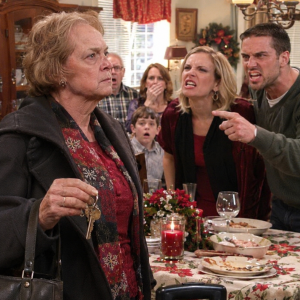
Before dessert, June approached the central table and offered Cameron a cream envelope. She congratulated us warmly, explaining that she and Harold hoped the gift might purchase a memorable dinner during our next vacation. Cameron opened the card, counted the three bills, and allowed contempt to spread across his face.
“Three hundred dollars seems more appropriate for tipping the staff than celebrating five years of marriage,” he announced loudly enough to attract nearby tables.
June’s smile faltered, but she explained that they had saved what they could. Lenora glanced at the bills and lifted her champagne flute.
“People can only give according to their circumstances,” she remarked. “We should appreciate the gesture without pretending it belongs at an occasion like this.”