Part 1: An Invitation Withdrawn
The first person who informed Margaret Cole that she could not attend her daughter’s wedding was the bride herself. Margaret stood in the sunlit kitchen of Briar Glen Vineyard, overlooking eighty acres of vines descending through Oregon’s Willamette Valley, while twenty-four-year-old Lily struggled to speak through the telephone.
“Preston believes everyone will feel more comfortable if you remain away from the ceremony,” Lily finally said.
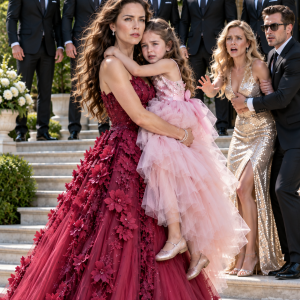
Margaret rested one hand against an oak chair her husband, Robert, had built twenty-five years earlier, when she had just turned twenty-five. By four-thirty that afternoon, Lily was supposed to cross the rose courtyard wearing an eight-thousand-dollar silk gown before two hundred and fifty guests. Afterward, everyone would dine beneath a white pavilion, drink Briar Glen’s finest reserve Pinot Noir, and celebrate beside the northern residence Margaret had promised the newlyweds.
Margaret had paid for the pavilion, catering, flowers, musicians, and nearly every flourish approved by Preston’s mother. She had also authorized the transfer of an eight-million-dollar stone residence designed by Robert after Lily’s birth, although its deed remained in escrow.
“Are you telling me that my own daughter does not want me at her wedding?” Margaret asked.
“Preston’s family values refinement and complete control, while you sometimes make them feel judged.”
Preston Hale was twenty-six, while his fifty-eight-year-old mother, Judith, belonged to an old Portland family whose fortune had survived generations of discreet manipulation. Judith spoke softly, dressed impeccably, and delivered insults so gracefully that inexperienced recipients occasionally mistook them for advice.
“They think I would damage the appearance of an event taking place on my property?”
Lily’s silence exposed an answer she lacked the courage to pronounce. She had recently graduated with a degree in business administration, yet ambition and intelligence had not protected her from a man who presented control as sophistication.
Margaret asked one final question. “Is excluding me genuinely what you want, rather than what Preston requires?”
After a painful hesitation, Lily whispered, “Yes, Mom, because I cannot survive another argument today.”
Part 2: The Conversation Behind the Conservatory
Margaret could have pleaded, shouted, or reminded Lily who financed the celebration, although none of those responses would reveal the truth. Two hours earlier, she had driven to Judith’s hilltop residence outside Dundee because Lily had forgotten the antique pearl comb once worn by Margaret’s mother.
While crossing a conservatory filled with white orchids, Margaret heard Preston speaking inside the adjoining library. She stopped only because her own name passed through the partially open door.
“Once Margaret disappears from today’s celebration, Lily will stop hesitating and sign everything after the reception,” Preston said.
Judith answered with condescending patience. “The girl hesitates because her mother taught her that emotions deserve a vote in financial decisions. Once embarrassment separates her from Margaret, you can secure the northern residence before addressing the vineyard.”
“Lily still insists she needs independent legal advice.”
“Marriage will redefine independence for her, especially after she understands that returning to her mother is no longer respectable.”
Margaret remained motionless behind a wall of orchids while their intentions assembled into a recognizable design. Preston had given Lily several documents involving limited-liability companies, management authority, and future inherited assets. Lily had postponed signing because she did not understand them, and Preston had responded by becoming alternately affectionate and furious. Excluding Margaret was never an aesthetic preference; it was an isolation strategy preceding an acquisition.
Now, standing inside her own kitchen, Margaret listened as Lily repeated Preston’s language about refinement and family unity. Grief pressed against her chest, but clarity prevented it from becoming helplessness.
“Then I hope you receive exactly the wedding you have chosen,” Margaret said before ending the call.
She entered Robert’s former study and suspended every remaining payment she controlled. The vendors received formal cancellations accompanied by contractual compensation where required. Margaret was not stealing completed labor; she was withdrawing permission for her property and money to support people plotting against her daughter.
Her next call went to forty-eight-year-old vineyard manager Luis Mendoza, who had worked beside the Cole family for nearly fifteen years.
“Deactivate every temporary gate code, secure the service roads, and admit nobody connected with the Hale family without my direct approval.”
Part 3: Eighty-Four Calls Before Sunset

Luis asked whether the wedding vendors should remove anything already delivered, and Margaret instructed him to protect their equipment while allowing orderly collection through the service entrance. She then called family attorney Nathan Brooks and stopped the northern residence transfer before the escrow agent released its deed.
Nathan requested an explanation, listened without interrupting, and confirmed that temporary suspension remained within Margaret’s rights. “Do not confront them alone, and preserve every message that follows,” he advised.
At four-thirty, Margaret watched sunlight cross the kitchen floor while her telephone began vibrating. Nineteen missed calls became forty-six, then sixty-two, as messages arrived from the wedding party and stranded guests.
At six o’clock, the total reached eighty-four unanswered calls. Twenty-three minutes later, Luis knocked against the kitchen’s glass door wearing an expression divided between concern and reluctant amusement.
“Would you consider a fifty-eight-year-old woman attempting to intimidate an iron gate with a Bentley a security emergency?” he asked.
Margaret almost smiled despite everything. “Judith drove into the gate?”
“She stopped before actual impact, although the performance impressed approximately thirty confused guests.”
Luis explained that Lily, Preston, Judith, and the wedding coordinator remained outside the main entrance. Margaret recharged her telephone, photographed every written accusation, and finally returned Lily’s call.
“Mom, what have you done?” Lily cried. “The gates are locked, the reception is gone, and everyone says the house transfer has been frozen.”
“I withdrew my property and unpaid funds from an event that explicitly excluded me.”
“That residence was supposed to belong to us.”
“The transfer was never completed, and this morning I heard Preston and Judith discussing how they would control it before pursuing the vineyard.”
Silence swallowed the noise surrounding Lily. Margaret described the conservatory conversation, including Judith’s belief that humiliation would separate Lily emotionally from her mother.
Preston seized the telephone and accused Margaret of sabotaging Lily’s happiness because she could not tolerate losing influence. His voice carried the polished outrage of someone discovering that another person still owned the asset he had already assigned himself.
Part 4: The Question He Could Not Answer
Margaret instructed Lily to activate the speaker so everyone near the gate could hear her response. She kept her voice calm because anger would allow Preston to replace the substance of her accusation with criticism of her temperament.
“If the documents you wanted Lily to sign are ordinary financial planning, send them immediately to Nathan Brooks for independent review.”
“Those agreements concern my marriage and remain none of your attorney’s business,” Preston snapped.
His refusal arrived too quickly, and Lily noticed the panic beneath it. “What agreements are you talking about, Preston, and why did you never mention signing them tonight?”
He attempted to redirect the conversation toward Margaret’s behavior, but Lily repeated her question with increasing steadiness. Finally, Preston insisted that married couples needed unified management and that his family possessed greater experience handling valuable property.
“Were you planning to place Mom’s vineyard beneath your company’s authority?” Lily asked.
“If you want a serious life with me, this is how serious families protect and expand wealth,” he answered.
Margaret closed her eyes briefly because Preston had offered possession where Lily had requested reassurance. “Lily, you may enter Briar Glen whenever you choose, but you must come through the gate alone. Decide which side represents the future you actually want.”
She ended the call before Judith could convert the invitation into another negotiation. Twenty minutes later, Luis’s voice emerged from the kitchen radio.
“Lily has left the others behind and is walking toward the house by herself.”
Margaret waited beside the same oak table where Robert had once helped their daughter complete school projects. Lily entered barefoot, carrying her heels in one hand while the hem of her expensive wedding dress dragged mud and crushed lavender across the floor. Her eyes were swollen, and fury kept her upright until she reached the nearest chair.