The Watch On the Table
The first time I saw my son-in-law put his hands on my daughter, he was smiling.
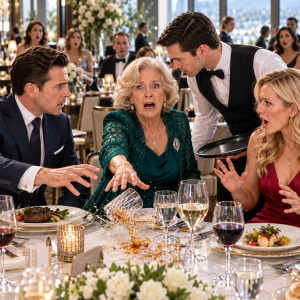
We were having dinner at a steakhouse in downtown Milwaukee for my sixty-first birthday. My daughter, Rachel, sat across from me beside her husband, Grant Whitaker. Their eight-year-old son, Noah, was busy arranging French fries into little rows beside his plate.
Rachel reached for her phone when it buzzed.
Grant caught her wrist.
Not violently. Not in a way that made the couple at the next table turn around.
He simply wrapped his fingers around her wrist and held it against the table.
“We’re having dinner.”
Rachel froze.
“I know. I was just checking—”
“Then it can wait.”
He was still smiling.
Her silver watch slipped loose from her wrist, struck the edge of her plate and landed face-down beside my water glass.
I heard the glass crack.
Rachel pulled her hand free and immediately grabbed the watch.
Not her wrist.
The watch.
“Rachel?”
She looked at me.
“I’m fine, Mom.”
Grant picked up his wineglass.
“She’s fine. She gets distracted.”
I didn’t answer him.
Rachel turned the watch over in her palm.
A thin crack ran diagonally across its face.
My husband, Tom, had given her that watch six months before he died.
Rachel had been twenty-eight then, newly married and worried about whether she was making the right choices in life. Tom had taken her to lunch without telling me and given her the watch in a little blue box.
On the back, he’d had seven words engraved.
For every second you choose yourself.
Rachel wore it almost every day.
Now she was rubbing her thumb over the broken glass.
“I can get that fixed,” Grant said.
Rachel shook her head quickly.
“No. I’ll do it.”
He looked at her.
She lowered her eyes.
“Sorry.”
That word bothered me more than anything else.
Sorry.
She had done nothing.
I watched her tuck the watch into her purse.
Then I looked at Grant.
He was asking Noah about soccer practice as though nothing unusual had happened.
Maybe that’s why it took me so long to understand what I’d seen.
There had been no shouting.
No scene.
Just five fingers around my daughter’s wrist and a cracked watch on a white tablecloth.
After dinner, Grant went to get the car.
Rachel and I waited near the restaurant entrance.
I touched her arm.
She flinched.
Only slightly.
But she did.
“Let me see your wrist.”
“Mom.”
“Rachel.”
She pulled down the sleeve of her blouse.
“Grant was annoyed. That’s all.”
“Does he do that often?”
She looked through the glass doors toward the street.
“Do what?”
That answer stayed with me.
Not no.
Do what?
Grant’s SUV pulled up.
Rachel kissed my cheek quickly.
“Happy birthday. I’ll call you tomorrow.”
She hurried outside.
I stood there watching Grant lean across the console to open her door.
From twenty feet away, they looked like a perfectly ordinary married couple.
The Things I Had Explained Away
Rachel didn’t call the next day.
She texted.
Busy morning. Love you.
I called that afternoon.
No answer.
At seven, I tried again.
Grant answered her phone.
“Hey, Diane.”
I stared at my screen.
“Why do you have Rachel’s phone?”
“She’s giving Noah a bath.”
“Can you put her on?”
There was a pause.
“She’s exhausted. Can she call you tomorrow?”
“I’d rather speak to her.”
His voice remained pleasant.
“Of course.”
I heard footsteps.
Then Rachel.
“Mom?”
“Are you okay?”
Another pause.
“Yes.”
“I want you to come over tomorrow.”
“I have things to do.”
“Lunch.”
“Maybe.”
I heard Grant say something in the background.
Rachel lowered her voice.
“I’ll call you.”
The line disconnected.
I sat at my kitchen table for a long time.
Once I started thinking about it, small things came back to me.
Rachel asking Grant which appetizer he wanted before ordering one for herself.
Rachel changing a dress because he said the first one was “a little much.”
Rachel declining a weekend with me because Grant didn’t like being left alone with Noah.
Rachel apologizing whenever she interrupted him.
I’d noticed all of it.
I’d just given each thing a harmless explanation.
Marriage was compromise.
Grant was particular.
Rachel hated conflict.
They were busy.
Everybody had habits.
The problem with harmless explanations is that you can stack a lot of them on top of something that isn’t harmless at all.
Two days later, I drove to their house.
Grant was at work.
Rachel opened the door wearing a gray sweatshirt.
Her sleeves covered her hands.
“Mom, you can’t just show up.”
I looked at her.
“Why not?”
She glanced behind her.
“Because Grant doesn’t like people dropping in.”
“Grant isn’t here.”
She said nothing.
Noah came running down the hallway.
“Grandma!”
He wrapped himself around me.
Rachel finally stepped aside.
I brought sandwiches and we ate at the kitchen island.
Rachel barely touched hers.
Every time her phone buzzed, she looked at it.
Not casually.
Immediately.
She would read the message, type something and set the phone face-down.
The fourth time, I asked:
“Is that Grant?”
“Work stuff.”
“His work or yours?”
She looked irritated.
“Mom, please.”
So I stopped.
I helped Noah with a puzzle instead.
About twenty minutes later, Rachel went upstairs to change a load of laundry.
Noah was trying to force two puzzle pieces together.
Without looking at me, he said:
“Mom doesn’t like the pantry anymore.”
I turned toward him.
“What?”
He shrugged.
“She uses the closet now.”
“What closet?”
He pointed toward the hallway.
“The one under the stairs.”
I waited.
“Why does she use the closet?”
He pushed harder on the puzzle piece.
“When Dad gets loud.”
My hands went cold.
“What does Mom do in there?”
“Waits.”
“For what?”
He finally looked up.
“For Dad to stop.”
Footsteps sounded overhead.
I changed the subject before Rachel came downstairs.
I didn’t question Noah again.
He was eight years old.
He wasn’t evidence.
He was a child describing what had become normal inside his own house.
That was enough.
When Rachel came back, I picked up my purse.
“Come outside with me.”
Her face changed.
“Why?”
“Because I want to talk to you where Noah can’t hear us.”
She hesitated.
Then followed me.
We stood beside my car.
“Noah told me about the closet.”
Rachel went completely still.
“He shouldn’t have said that.”
“Why not?”
“Because he doesn’t understand.”
“Then explain it to me.”
She crossed her arms.
“Grant gets stressed.”
“And you hide?”
“I don’t hide.”
“Rachel.”
“I just give him space.”
I reached for her hand.