The Things My Father Never Said

On the evening of my father’s funeral, I found myself standing in the kitchen of the modest brick house where I had grown up, staring at an empty chair and wondering how a person could spend so many years wishing for freedom, only to discover that freedom felt remarkably lonely when it finally arrived.
I was twenty-three years old, and for the previous five years, my father had required me to pay him $250 every month for the privilege of sleeping in the bedroom where I had spent nearly my entire childhood. There had been months when handing him that money meant postponing necessary repairs on my car, turning down invitations from friends, or putting another dream quietly aside because I simply couldn’t afford it.
I had resented him for that, and for many other things, believing that somewhere along the way, he had stopped caring about the kind of life I wanted for myself.
But that evening, an unexpected visitor arrived carrying an ordinary cardboard box, and before the night was over, I would discover a side of my father that I had spent fourteen years believing no longer existed.
When Our House Was Filled With Music
My earliest memories of growing up in a small neighborhood outside Fort Wayne, Indiana, are accompanied by music, the comforting smell of my mother’s cooking, and the sound of my father laughing in a way that, for many years afterward, I would struggle to remember.
My father, Russell Bennett, had a beautiful old acoustic guitar that he kept beside the living room fireplace, and most evenings, after returning home from work, he would settle into his favorite armchair, loosen his collar, and play whatever song happened to come into his head.
My mother, Elaine, worked at a local elementary school, and although she insisted that she couldn’t carry a tune, she sang along from the kitchen while preparing dinner, occasionally abandoning whatever she was doing to dance across the living room.
“Come on, Tyler. Your dad needs somebody who actually knows how to sing,” she would announce, holding out her hand to me.
Dad would pretend to be offended before changing the melody into something ridiculous, and within minutes, the three of us would be laughing so hard that dinner would have to wait.
I remember sitting beside him with a little plastic guitar that my parents had given me for Christmas, watching his fingers move effortlessly across the strings and believing that there was nothing in the world my father couldn’t do.
Back then, he was affectionate, playful, and endlessly patient with me, even when I interrupted his songs or asked him to play the same melody half a dozen times before bedtime.
Everything changed when I was nine years old and we lost my mother following a serious illness.
For months afterward, neighbors brought casseroles, relatives called regularly, and people from her school stopped by with flowers and handwritten cards, but eventually, as happens in most families experiencing loss, everyone returned to their own lives while my father and I remained inside a house that no longer felt like home.
Dad stopped playing his guitar, and the instrument gradually disappeared from the living room, along with the music that had once accompanied nearly every ordinary moment of our lives.
He took additional shifts at the industrial maintenance company where he worked, leaving before sunrise and often returning long after dinner, his hands rough from handling machinery and his shoulders permanently bent beneath a kind of exhaustion that I was too young to understand.
He made sure I had food, clean clothes, and everything required for school, but the conversations that had once come so naturally between us became increasingly practical and brief.
One afternoon, when I was eleven, I came home particularly excited because a teacher had selected one of my drawings for a school exhibition, and I waited beside the kitchen table until Dad finally arrived.
“They’re putting my picture in the front hallway at school,” I told him proudly. “Would you come see it on Friday?”
He glanced at the notice I handed him before placing it beside a stack of unopened bills.
“I’ve got a late shift Friday. Maybe another time.”
I nodded and carried the paper upstairs, pretending that his answer hadn’t disappointed me.
There were hundreds of moments like that throughout my childhood, none of them particularly remarkable on their own, but together they created a distance between us that neither of us seemed to know how to cross.
The Dream He Didn’t Want Me to Follow
When I was thirteen, I discovered a collection of photographs tucked inside an old wooden cabinet in our basement, beneath some Christmas decorations and several boxes of my mother’s belongings.
At first, I barely recognized the young man standing beneath the stage lights in the photographs, wearing a faded denim jacket, holding an electric guitar, and smiling at an audience that appeared to fill an entire theater.
It was my father.
There were photographs of him performing alongside three other musicians, posing outside concert venues, and sitting in recording booths with enormous headphones covering his ears.
I carried several of the pictures upstairs, excited by the discovery.
“Dad, were you actually in a band? How come you’ve never told me about this?”
He examined the photographs for a moment, and something unfamiliar passed across his face before his expression became guarded again.
“That was before you came along. We played around town for a few years.”
“Were you good? Did you ever make any records?”
He gathered the photographs from my hands and returned them to their envelope.
“It was a different time, Tyler. Leave it alone.”
I couldn’t understand why something that had clearly brought him so much happiness was now a subject he refused to discuss.
Nevertheless, discovering those photographs awakened something inside me, and by sixteen, I had purchased a secondhand electric guitar from a neighborhood garage sale, spending nearly everything I had earned mowing lawns that summer.
The guitar was a worn cherry-red instrument with a small crescent-moon sticker near its tuning pegs, and although it had scratches across the body and a damaged bridge that occasionally caused problems, I treasured it.
I taught myself chords through online tutorials, practiced until my fingertips became sore, and eventually began writing songs of my own.
Music became the place where I could put feelings I had never learned how to express, particularly the loneliness that followed me around our increasingly silent house.
During my junior year of high school, I discovered an audio engineering program at a college in Indianapolis, and for several weeks, I carried its brochure in my backpack, imagining what it might feel like to spend my days learning how to record, produce, and arrange music professionally.
When I finally gathered enough courage to show Dad, he looked through the brochure with considerably less enthusiasm than I had hoped.
“How much does this cost?” he asked.
I explained that there were financial aid opportunities and that I was willing to work while studying.
He folded the brochure and pushed it back across the table.
“You ought to learn something that will keep you employed. Electrical work, plumbing, something people are always going to need.”
“But this is what I want to do. You used to play music, too.”
His expression hardened.
“That’s exactly why I’m telling you not to build your future around it. Loving something doesn’t guarantee it’ll put groceries on your table.”
I remember looking at him that evening and wondering how someone who had once stood beneath theater lights, surrounded by people cheering for him, could speak so dismissively about the very thing that had made him happy.
What I didn’t understand then was that my father wasn’t speaking from indifference, but from fear, and fear had gradually become the language through which he expressed almost everything.
Unfortunately, it was a language that sounded very little like love.
The Birthday That Changed Our Relationship
On my eighteenth birthday, I woke up to the smell of coffee and found Dad sitting at the kitchen table, reading the local newspaper.
There was no birthday cake, no wrapped present, and no suggestion that we might go somewhere together that evening, although by then, I had learned not to expect much from birthdays.
I was pouring myself a bowl of cereal when he placed a handwritten piece of paper beside my breakfast.
At the top, he had written my name, followed by a monthly amount of $250.
“Starting next month, you’ll be paying for your room,” he said, folding his newspaper. “I expect the money on the first.”
I initially thought he was joking, but when I looked at him, his expression was entirely serious.
“You’re making me pay rent? I just turned eighteen.”
“You’re old enough to start taking responsibility for yourself.”
“I’m still finishing high school, Dad. I’m trying to save for college.”
He picked up his coffee.
“Then you’ll have to figure out how to do both.”
I stared at the paper, feeling an uncomfortable mixture of embarrassment, anger, and disbelief, particularly because some small part of me had still hoped that becoming an adult might improve our relationship.
Instead, it felt as though my father had officially reduced my place in our family to a financial arrangement.
I had already been working weekends at a local hardware store, helping customers load purchases and organizing inventory, but after that conversation, I began accepting additional evening shifts whenever my manager offered them.
My earnings disappeared remarkably quickly between gasoline, car insurance, food, clothing, and the money Dad expected each month, leaving very little for the recording equipment or education I had hoped to pursue.
I watched friends leave for college, move into apartments, and make plans for their futures, while I remained in my childhood bedroom, calculating whether I could afford another tank of gasoline before payday.
Whenever I managed to accumulate a little savings, some unexpected expense seemed to appear, and although $250 might not have sounded like an enormous amount to someone earning a comfortable salary, it represented many hours of work to me.
What made the situation particularly difficult was watching Dad occasionally purchase new tools for his woodworking hobby or spend a Saturday morning browsing outdoor equipment.
One evening, when he returned home carrying a new fishing reel, I couldn’t contain my frustration.
“I guess some people around here can afford to enjoy themselves.”
He looked at me for a moment before setting his purchase on the counter.
“Keep working, Tyler. You’ll get there.”
His answer made me feel even more misunderstood, because I wasn’t afraid of working hard, and I certainly wasn’t expecting him to finance every ambition I had.
I simply wanted to believe that my own father was interested in seeing me succeed.
Related Posts
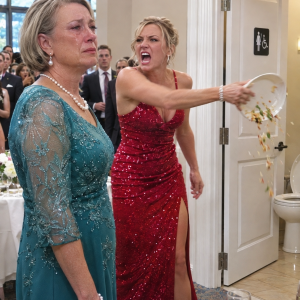
At the $42,000 Anniversary Party I Paid For, My Daughter-in-Law Gave My Chair Away, Pointed Toward the Bathroom, and Sneered, “Just Because You Paid for Everything Doesn’t Mean You’re Welcome at My Table. Go Eat in There!” Fifty-Eight Guests Watched as My Own Son Told Me to Stop Embarrassing His Wife. I Held Back My Tears, Picked Up My Purse, and Went to See the Hotel Manager. What He Showed Me Made Me Question Everything I Thought I Knew About My Own Family.

My Mother-in-Law and I Were Shopping When We Caught My Husband Holding Another Woman’s Hand. “Don’t Make a Scene, Sweetheart. Let Me Handle This,” She Whispered. Before Sunrise the Next Morning, I Overheard Him Asking His Father to Let That Woman and Her Four-Year-Old Daughter Move In—While I Was Still Staying Upstairs. My Mother-in-Law Walked In With a Black Folder and Exposed a Secret $35,000 Transfer. He Tried to Explain, but When She Placed One More Document in Front of Me, He Suddenly Had Nothing Left to Say…

Just 4 Days After I Gave Birth, My Husband Locked Me and Our Newborn Daughter Out of Our Home, Leaving My Belongings in Garbage Bags and Her Little Cradle in the Freezing Rain. He Opened a $3,000 Bottle of Champagne and Bragged Online That He Had Finally Gotten Rid of the Woman Holding Back His Career. His Mother and Sister Celebrated. I Quietly Blocked Them All. But at 7:15 the Next Morning, Just Hours Before His Big Promotion, His CEO Called My Private Number and Said in a Cold, Measured Voice, “Does Your Husband Have Any Idea Who You Really Are?”