News

4 Things You Must Never Say at a Funeral

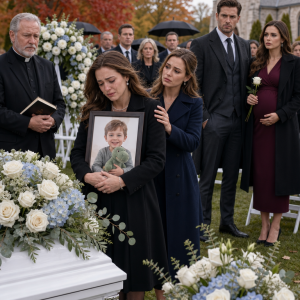
Funerals are deeply emotional occasions filled with grief, reflection, and remembrance. In such moments, the words we speak carry significant weight. Even with the best intentions, certain remarks can come across as dismissive, insensitive, or even hurtful to those mourning a loved one. Whether you’re comforting a friend, family member, or colleague, it’s essential to approach conversations with empathy and care.

Here are four common phrases to avoid at a funeral — and more thoughtful alternatives to express your support.

1. “They’re in a better place now.”

While often meant to offer comfort, this phrase can unintentionally dismiss the mourner’s pain. Suggesting that someone is “in a better place” might come across as minimizing the grief someone feels in the present moment. For those still processing the loss, it can feel like their sorrow is being brushed aside.

What to say instead:
“I’m so sorry for your loss. I’m here if you need anything.”
Simple, sincere words are often the most meaningful.

2. “At least they lived a long life.”

While it’s true that age can sometimes provide perspective, it doesn’t soften the pain of losing someone important. Grief doesn’t come with a formula, and implying that a long life somehow makes death easier can feel dismissive. The mourner may even feel guilty for their sorrow, as if they should feel grateful instead of heartbroken.


What to say instead:
“They touched so many lives. I know they meant a lot to you.”
Acknowledge the significance of their life — and their loss — without trying to justify it.

3. “I know exactly how you feel.”

Even if you’ve experienced a similar loss, grief is deeply personal. Saying “I know how you feel” can shift the focus away from the mourner and onto yourself. It may also sound presumptuous if your circumstances were different, even slightly.

What to say instead:
“I can’t imagine what you’re going through, but I’m here for you.”
This approach shows empathy without assuming shared experience.

4. “Everything happens for a reason.”

This phrase often stems from philosophical or spiritual beliefs, but in the context of fresh grief, it can feel cold or abstract. Assigning meaning to a loss can seem like an attempt to rationalize pain rather than acknowledge it. For someone hurting, it might sound like you’re trying to explain away their sorrow instead of simply honoring it.

What to say instead:
“This must be incredibly hard. I’m so sorry.”
Recognizing their pain without offering explanations can be a powerful show of compassion.

Final thoughts

When offering condolences, your words don’t need to be poetic — they just need to be genuine. Often, your presence, a warm hug, or a quiet moment of listening can mean more than anything you say. The most important thing is to speak from the heart, and to be there for someone in the way they need most.

Related Posts

My Husband Paid Me $50 Million to Divorce Him So He Could Marry the Woman Carrying His Twins—But After I Signed and Flew to California, One Message Made His Mother Cross the Country to Bring Me Back…

The Price of Leaving My husband placed the divorce agreement beside my untouched plate as calmly as if he were handing me a quarterly report. We were sitting...

Everyone Came to Celebrate the Five-Million-Dollar Estate My Husband Claimed to Own—But After His Mother Humiliated Our Two Daughters, I Walked Away and Let the Real Owner Bring His Perfect Afternoon to an End…

The Table at Hawthorne Point The Caldwell family’s summer celebration was held at Hawthorne Point, a limestone estate overlooking Narragansett Bay, where white hydrangeas lined the terraces and...

“For Four Years, My Husband Always Said, ‘My Parents Are Too Anxious to Meet You.’ So Every Christmas, I Mailed Them Gifts and Sent Them Money. On New Year’s Eve, I Followed Him to a Beautiful House, Heard a Teenage Boy Shout, ‘Dad, Dinner’s Ready!’… and Realized I’d Been Paying for His Secret Family All Along. I Quietly Pulled Out My Phone and Started Recording.”

The Family Dinner That Was Never Mine The first thing I saw was my husband’s hand. It rested comfortably on another woman’s shoulder. Not casually. Not accidentally. Like...

At My Daughter’s Funeral, My Son-in-Law Pointed at His Three Girls—12, 9, and 6—and Announced, “They’re Going Into Foster Care. My New Fiancée and I Deserve a Fresh Start.” I Took Them Home Without Arguing, but at 3 A.M., the Oldest Placed a Purple Bag on My Table and Whispered, “Mom Said to Open This Before Dad’s Wedding.” What She Had Protected for Months Changed Everything We Thought We Knew..

The Things My Daughter Left Behind A Promise Beside the Grave My son-in-law waited until the minister had finished the final prayer before announcing that he no longer...

I Took Our 7-Year-Old Daughter to Surprise My Husband at His Company Gala—But His Assistant Said, “His Wife and Son Are Already Upstairs.” When the Elevators Opened, My Daughter Whispered, “Daddy?”… Then One Phone Call Revealed Why Her Name Was Hidden in His Secret File

The Gift in Her Hands For nearly a month, my husband had been coming home after our daughter was asleep. He always had a reasonable explanation waiting for...

Để lại một bình luận

Email của bạn sẽ không được hiển thị công khai. Các trường bắt buộc được đánh dấu *