Moral Stories Life Short Tales

After My Husband’s Funeral, My Mother-In-Law Sl@p/ped My Seven-Year-Old Son For Accidentally Breaking His Father’s Picture Frame. Then She Told Us To Leave The Family Mansion, Never Knowing My Husband Had Left That House, His Fortune, And The Truth To Our Child.

Part 1 — The House That Turned Cold After The Funeral

“Take that child and leave this house, Maren. The Ashford family will not be reduced to sheltering reminders of my son’s worst mistake.”

Those were the first words my mother-in-law spoke to my seven-year-old son after we buried his father on a gray afternoon in Connecticut. They landed in the marble foyer of Ashford House while the scent of white lilies still clung to our black clothes, while my son still held the program from the funeral service in both hands, and while I was still trying to understand how the world could continue making sounds when my husband was no longer in it.

My name is Maren Cole. I was thirty-one when Graham Ashford died, and until that day, I thought grief would be the sharpest thing I would ever survive. I thought the worst moment would be watching the casket descend into the earth while my son, Oliver, looked up at me with his chin trembling and whispered, “Mom, is Dad still going to know where we are?”

I had no answer large enough for that question. I only held his hand and said the truest thing I could manage.

“Yes, sweetheart. Love does not get lost.”

Graham had belonged to the kind of family that appeared in business magazines under words like legacy, influence, and stewardship. The Ashfords owned real estate across Manhattan, development interests in three states, and a stone mansion in Greenwich that looked elegant from the road and felt freezing inside. From the day Graham married me, his mother, Celeste, treated me like a clerical error in the family record. I had grown up in a working-class neighborhood in Queens, raised by a school secretary and a delivery driver. To the Ashfords, that meant I had entered their world through the wrong door.

Graham never allowed them to shame me in his presence. He had been kind in a family that mistook kindness for weakness, and he loved Oliver with a devotion that made every room warmer when the two of them were together. Because of that love, I kept hoping his family would soften toward our son. I kept thinking that blood would matter, that a child’s grief would be enough to silence old contempt.

I was wrong.

After the burial, we returned to Ashford House because the family insisted guests would expect us there. The drawing room had been arranged with silver trays, expensive liquor, and a framed portrait of Graham placed on a table beneath a wreath. Guests moved through the room in murmurs, offering condolences that felt polished and weightless. I wanted only to take Oliver somewhere quiet, remove his too-tight tie, and let him cry without being watched.

Instead, Oliver saw his father’s portrait and walked toward it with the slow, uncertain steps of a child approaching something sacred. He lifted the frame with both hands.

“Hi, Dad,” he whispered.

The frame slipped. Glass shattered across the floor.

Before I could reach him, Celeste crossed the room and struck my son across the face.

The sound cracked through the mansion louder than the breaking glass had. Oliver froze, one hand pressed to his cheek, his eyes wide with a confusion more devastating than pain.

I ran to him and pulled him against me.

“Do Not Touch My Child,” I said, my voice shaking with a fury that seemed to come from somewhere beneath my bones.

Oliver began sobbing into my coat.

“I am sorry, Mom. I did not mean to break Dad’s picture.”

“You did nothing wrong,” I said, kneeling so he could see my face. “Nothing about loving your father was wrong.”

Celeste adjusted the pearl bracelet on her wrist as though she had corrected a servant rather than hurt a grieving child.

“That boy has always been careless. He ruined Graham’s life, and so did you.”

Graham’s sister, Elise, gave a small bitter laugh from beside the fireplace.

“Mother is not wrong. Graham changed after you arrived. He became sentimental, distracted, and embarrassingly dependent on people who never belonged here.”

My father-in-law, Richard Ashford, approached with the calm of a man used to ending conversations by making others feel smaller.

“Maren, let us be practical. You were never suited to this family, and Graham’s loyalty to you clouded his judgment.”

Celeste pointed toward the staircase.

“Go upstairs, collect whatever cheap little things are yours, and leave before the evening becomes more unpleasant.”

I held Oliver tighter. Something in me cracked then, but not in the way they expected. I did not plead. I did not scream. I wiped my face with the sleeve of my black dress and took out my phone.

“Fine,” I said.

The room went quiet enough to hear the rain against the windows.

I dialed the number Graham had made me memorize six weeks earlier, after coming home pale and exhausted from a meeting he refused to describe.

“Mr. Callahan,” I said when the attorney answered. “It happened. They did exactly what Graham said they would do.”

Celeste narrowed her eyes.

“Who did you call?”

I looked directly at her for the first time in years without lowering my gaze.

“The person Graham told me to call if this family showed me who they really were.”

Part 2 — The Will That Waited For Cruelty

For almost an hour, the Ashfords mocked me in their drawing room while Oliver slept against my lap, exhausted from crying. His cheek still carried the red mark of Celeste’s hand. Every time I saw it, grief inside me changed shape. It became colder, cleaner, and more useful.

Elise walked around with a glass of wine, speaking loudly enough for relatives to hear.

“Perhaps she called someone from Queens to pick her up in a rideshare.”

A few cousins laughed. Richard checked his watch.

“This has gone on long enough. Leave quietly, Maren, and I will see that you receive something modest until you can reorganize your life.”

“The person making a spectacle is not me,” I said.

Celeste’s eyes flashed.

“Careful. You are still standing under my roof.”

“Not for long,” I replied.

The doorbell rang.

The butler opened the door, and three people entered: Samuel Callahan, Graham’s private attorney; a Connecticut notary public; and a young associate carrying a sealed black document case. Samuel was in his late fifties, with silver hair, a weathered face, and the quiet manner of a man who did not need volume to carry authority.

Richard stood immediately.

“What is the meaning of this, Samuel?”

Samuel inclined his head.

“Mr. Ashford, Mrs. Ashford, I am sorry for the timing. Graham left explicit instructions that these documents be presented on the day of burial if Maren or Oliver were threatened, removed from the residence, or harmed by any member of this family.”

The word harmed changed the air.

Elise slammed her glass onto a table.

“That is absurd. Graham would never write something so insulting.”

The notary opened her folder.

“The documents were executed and witnessed forty-two days before Mr. Ashford’s death.”

I looked at Samuel. Something in his expression made my stomach turn.

“Before his accident?” I asked.

Samuel’s eyes softened.

“That issue is addressed in the sealed appendix.”

Richard’s face reddened.

“Read whatever performance he arranged and be done with it.”

Samuel opened the first document.

“Graham Ashford designated his son, Oliver Graham Ashford, as the sole beneficiary of his personal estate, voting shares, property holdings, liquid accounts, insurance proceeds, and privately held development interests. All such assets have been transferred into an irrevocable trust for the benefit and protection of the child.”

Celeste’s mouth opened, but no sound came.

Samuel continued.

“Maren Cole Ashford is named as Oliver’s legal guardian, acting trustee, and sole representative of the child’s interests until he reaches legal adulthood, with independent fiduciary oversight provided by Callahan & Price LLP.”

Elise stood.

“No. Graham was not in his right mind.”
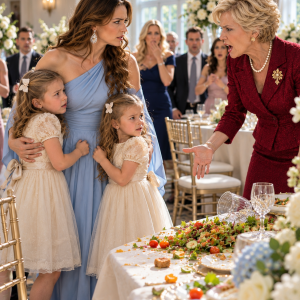
“The competency evaluation is attached,” Samuel said calmly. “Signed by two physicians and recorded on video.”

Richard’s voice dropped.

“This house belongs to the family.”

The notary checked a page.

“Ashford House was purchased by Graham Ashford five years ago with separate personal funds and recorded solely in his name. As of this afternoon, it is an asset of Oliver’s trust.”

The silence that followed felt almost physical. Celeste turned toward me with hatred naked on her face.

“You manipulated him.”

I stood carefully, easing Oliver’s head onto a pillow.

“No. Graham finally saw what all of you were.”

Elise scoffed.

“And what exactly did he see?”

I looked at Samuel before answering. He gave a small nod.

“He saw transfers from company accounts into Elise’s boutique venture. He saw Richard using development funds to cover personal investment losses. He saw Celeste speaking with attorneys about challenging my fitness as a mother if anything happened to him. He saw enough to know that love was not what this family wanted from him.”

Celeste stumbled back.

“Lies.”

Samuel removed another folder.

“We have bank records, emails, audio recordings, internal audits, and a video statement from Graham.”

Elise began crying then, though not for her brother. Fear has a sound, and hers filled the room.

Samuel’s next words made my blood go cold.

“Before we address the letter Graham left for Oliver, we must discuss what may have occurred on the night of the crash.”

Part 3 — Graham’s Last Protection

Richard’s composure began to fracture.

“What do you mean, what may have occurred? Graham lost control in bad weather. That is what happened.”

That was the story they had repeated at the funeral, at the graveside, and to every person who approached me with pity. A storm. A wet road. A curve on the Merritt Parkway. A terrible accident. They said it so often that I had begun to hate the smoothness of it.

But Graham had been a cautious driver. He shared his location when he left late meetings. He called before getting on highways during storms because he knew I worried. On the night he died, he sent nothing.

Samuel arranged several photographs on the table.

“Three months before his death, Graham hired an outside forensic accounting team. Their preliminary report showed large-scale misappropriation, forged approvals, and shell-company payments connected to individuals in this room.”

Elise covered her mouth.

“I only borrowed what he would have given me anyway.”

“You forged his signature to open a credit facility for a failing retail company,” Samuel said. “When he discovered it, you threatened to tell the press that Maren had isolated him from his family for money.”

Celeste snapped, “Stop Talking.”

That command said more than denial.

Samuel continued.

“Graham also recorded conversations with you, Mrs. Ashford. In one, you threatened to use family influence to challenge Maren’s custody if he did not revise his estate plan in favor of his parents and sister.”

I felt sick. I remembered those weeks. Graham coming home late, his tie loosened, his eyes shadowed, his smile tender but tired. He had told me it was pressure from work. I had believed him because I wanted to believe marriage meant sharing burdens only when the other person was ready.

He had been building a wall around us alone.

“That is why he changed the will,” Samuel said. “That is why he placed everything into trust. That is why he restricted access to accounts, revoked prior authorizations, and recorded emergency testimony.”

Richard gripped the arm of a chair.

“None of this proves anything about a car crash.”

“Correct,” Samuel said. “Which is why I am not finished.”

The young associate opened the sealed case and removed a clear evidence sleeve containing a flash drive and printed stills from surveillance footage. The images showed Graham’s car in the company parking garage, time-stamped two nights before his death. A man in a service jacket crouched near the rear wheel area. Another image showed the same man receiving an envelope near a loading entrance.

The room tilted around me.

“What is that?” I whispered.

Samuel’s voice became gentler.

“Graham took the car to an independent mechanic after noticing brake irregularities. The mechanic found signs of intentional interference. Graham planned to turn the matter over after identifying who ordered it. That same night, he recorded a video message for you.”

Celeste whispered, “No.”

The notary placed a tablet on the table.

“The video was sealed and authenticated. Graham’s instruction was that it be played if his death occurred under suspicious circumstances or if his family attempted to remove Maren and Oliver from their home.”

Oliver stirred in his sleep, and I brushed his hair back, trying to remain steady as the screen lit.

Graham appeared in his office, sleeves rolled, face tired, eyes focused. Alive. So heartbreakingly alive that the room blurred.

“Maren,” he said, “if you are seeing this, I am sorry. I thought I could solve it before it touched you and Oliver. That was arrogant of me, and I hope someday you can forgive me for keeping fear to myself.”

I pressed my hand over my mouth.

“My family will not accept what I have done. They will try to make you feel small. They will say you never belonged. They will use money, history, and reputation as weapons because those are the only languages they trust. But you and Oliver are my family. You are my home.”

Celeste began crying, but her tears arrived in a room that no longer trusted them.

“Mother, Father, Elise, if Samuel is playing this for you, then I knew more than you believed. I knew about the shell companies. I knew about the forged signatures. I knew about the custody plan. If anything happens to me before I can bring this forward myself, every document goes to state investigators and federal authorities.”

Richard sat down as if his legs had failed.

Graham looked directly into the camera, and for a moment it felt as if he had reached across death to steady me.

“Maren, do not beg them. Do not remain in a room where anyone dares to shame our son. Tell Oliver that his father chose him above every asset, every name, and every old obligation. Tell him he was never a burden. He was the best part of my life.”

Oliver opened his eyes at the sound of his father’s voice.

“Daddy?” he whispered.

I held him tightly while the video ended.

When the screen went dark, no one moved. Relatives who had laughed earlier stared at the floor. Elise shook silently. Celeste reached toward me.

“Maren, I was grieving. I did not know what I was doing.”

I looked at Oliver’s cheek.

“You knew exactly what you were doing.”

“I did not mean to hit him that hard.”

“That is not grief,” I said. “That is contempt finally feeling safe enough to show itself.”

Richard tried to reclaim authority.

“You cannot manage what Graham left. You need this family’s experience.”

“Oliver needs peace,” I said. “I need attorneys, accountants, and honest people. A last name is not a qualification.”

Samuel stepped forward.

“Mr. Ashford, effective immediately, you are suspended from any role involving Graham’s personal holdings or voting interests. Formal notices will be delivered to banks, boards, and regulatory counsel tomorrow morning. We will also request a criminal investigation into misappropriation, forged instruments, and possible involvement in the vehicle tampering.”

Richard’s face twisted.

“This is betrayal.”

A laugh escaped me, broken and bitter.

“My son was called trash in the house his father left him. He was struck beside his father’s picture. You tried to throw us out of a home that no longer belongs to you, and you still think you are the victim.”

Celeste clutched the chair.

“You would not put us on the street.”

I remembered her order from an hour earlier.

“No,” I said. “Because I am not you. You have seven days to remove personal belongings under attorney supervision. After that, no one enters this house without written permission from the trustee.”

Elise sobbed.

“My room is here.”

Samuel glanced at his documents.

“You own a paid-off apartment in Tribeca purchased with funds under review, Ms. Ashford. You will not lack shelter.”

Oliver slipped from my arms and stood in front of Celeste. His voice was small, but it carried across the room.

“I am not trash.”

That silence hurt them more than any accusation.

I knelt and pulled him back against me.

“No, sweetheart. You are loved. You are wanted. You are the greatest gift your father ever gave me.”

Part 4 — Seven Days To Leave

I did not sleep that night. I lay in the bedroom I once shared with Graham, holding Oliver while he dreamed restlessly beside me. In the halls, the Ashfords whispered, argued, called attorneys, and dragged suitcases over old wood floors. The house that had made me feel like an intruder for years now sounded like it was exhaling them.

At dawn, Samuel returned with forensic accountants, security consultants, and a child therapist. The first thing I asked for was not an asset review.

“I Want Oliver Safe Before Anything Else.”

The therapist met him in the garden. From the window, I watched him draw a picture of Graham wearing a blue superhero cape and holding both our hands. I cried quietly, but those tears were different from the ones I had shed at the cemetery. These were grief, love, and a strange new strength standing together.

Over the next week, the investigation widened. Richard had pledged company assets without board authorization to cover failed investments. Elise had funneled money into her retail business while presenting herself publicly as a self-made entrepreneur. Celeste had nearly completed paperwork alleging my emotional instability, preparing to challenge custody if Graham died. The man in the garage footage was a contract mechanic connected to a vendor tied to one of Richard’s shell companies.

The process moved with frightening speed once Samuel sent Graham’s evidence to the proper authorities. Digital records have a way of ignoring family mythology. Bank transfers do not care about old names. Security footage does not flatter pearls, suits, or grief.

On the seventh day, Celeste descended the staircase with a beige suitcase. She was not wearing pearls. Without them, she looked older, smaller, and almost human. Oliver stood beside me in the foyer because he insisted he wanted to see them leave.

Celeste stopped in front of him.

“Oliver, Can You Forgive Your Grandmother?”

He did not answer. He stepped behind me and held my hand.

That was answer enough.

Richard stood near the door, rigid with resentment. Elise passed us without looking up. When the iron gates closed behind their cars, the mansion became quiet in a way I had never heard before. Martha, the housekeeper who had worked there for years, opened the windows to let in cold morning light.

She brought me Graham’s portrait in a new frame.

“I am sorry, Mrs. Ashford,” she said. “I knew they were cruel, but I never thought they would do that to a child on the day of his father’s funeral.”

“Thank you, Martha.”

Celeste would have hated hearing the staff call me Mrs. Ashford with respect. For the first time, the title did not feel borrowed.

That afternoon, I ordered the massive ancestral portraits removed from the main hall. Not out of vengeance, but because the house needed air. In their place, I hung family photographs: Graham and Oliver eating ice cream in Central Park, the three of us laughing in front of a food truck, Oliver asleep on Graham’s chest during a summer storm. The mansion stopped looking like a museum of inheritance and began becoming a home.

Part 5 — What Graham Really Left Us

A year later, we launched the Graham Ashford Worker Family Fund, dedicated to supporting the children of construction workers injured on job sites. Graham had always believed that wealth should protect people before it decorated names on buildings. I wanted the fund to carry that belief forward without the coldness his family had mistaken for prestige.

At the opening ceremony, Oliver wore a white shirt and new sneakers. He walked to his father’s portrait and placed a yellow flower beneath it.

“Mom, Is Dad Happy?”

I looked at the workers gathered on the lawn, at their children running under the trees, at Martha standing beside my mother near the refreshment table because in our home no one who loved us stood behind invisible walls.

“Yes,” I said. “I think he is very happy.”

Oliver squeezed my hand.

“Then I am happy too.”

That night, we walked through the same drawing room where Celeste had called him a reminder of Graham’s mistake. The room was different now. There were books on low shelves, a woven rug, plants near the windows, and a small table where Oliver built elaborate cities from wooden blocks. Graham’s portrait stood in a simple frame, the glass replaced, the smile unchanged.

Grief still lived with us. It sat at dinner sometimes. It appeared when Oliver reached for a story only Graham used to tell. It came quietly when I found one of Graham’s notes in a coat pocket or heard a song he loved in the car.

But fear no longer lived there.

Before bed, I knelt in front of Oliver.

“I Want You To Remember Something For The Rest Of Your Life,” I said. “No one is allowed to decide your worth because they have more money, a bigger house, or a famous last name.”

He nodded solemnly.

“What if someone says mean things again?”

“You come to me. And if I am not there, you remember what your father said. You are loved above everything.”

Oliver smiled.

“Dad was smart.”

“Very smart.”

He hugged me.

“You are smart too, Mom.”

In my nightstand, I kept the handwritten letter Graham left for me. I had read it so often that some lines lived inside me now. One of them said: I do not want to leave you wealth that forces you to live under the shadow of greedy people. I want to leave you protection, freedom, and enough legal ground that no one can make you ask permission to exist.

That was what he had done.

We did not keep Ashford House to display wealth. We made it a place where my mother could enter through the front door without worrying about her worn shoes. A place where Martha sat at our Christmas table. A place where Oliver could break a picture frame by accident and be wrapped in comfort instead of shame.

Graham’s true legacy was not the mansion, the accounts, the shares, or even the trust. It was the proof that love can plan protection beyond its own lifetime. It was the fact that a father could still stand between his son and cruelty after he was gone. It was the knowledge that a mother who has been humiliated is not defeated when she rises for her child.

They called my son a reminder of a mistake.

They never understood that in a room full of expensive names and hollow hearts, Oliver was the only priceless thing there.

And when the house finally settled into night, the silence no longer sounded like fear.

It sounded like belonging.

THE END

Related Posts

My Husband Secretly Drained $186,500 From Our Daughter’s College Fund To Pay For The Life He Was Building With Another Woman.

The House That Kept SecretsFor eleven years, Eleanor Hayes believed she understood the architecture of her life. Every room in the old Connecticut farmhouse had a memory attached...

A Frightened Little Girl Quietly Handed A 64-Year-Old Biker A Crumpled Gas Receipt And Whispered, “I Think You Dropped This”… He Opened It, Read The Hidden Crayon Message, And Within Seconds, The Man Standing Beside Her Could No Longer Hide The Truth

The Morning Under the Bright CanopyThe morning over northern Indiana had that pale blue color that comes right before the sun fully commits to the day. The kind...

At Exactly 12:17 A.M., A 16-Year-Old Boy Knocked On A Biker Clubhouse Door Carrying His Little Sister, Begging For Just One Safe Night… He Never Imagined That One Decision Would Expose The Man Everyone Trusted And Completely Rewrite Both Of Their Lives

The Knock After MidnightAt 12:17 in the morning, someone knocked on the back door of the Iron Ridge clubhouse.It was not a polite knock. It was fast, uneven,...

My Husband Waited Until the Day He Became a Millionaire to Divorce Me and Give My Home to His Mistress. He Thought 11 Years of Marriage Meant Nothing After His Grandmother’s Death. I Didn’t Beg or Fight—Because His Grandmother Had Hidden One Final Clause in Her Will That Would Take Everything Away From Him.

The Call That Broke the HouseThe phone rang just as Nora Bennett was sliding a tray of blueberry muffins out of the oven.The timer still beeped.Steam curled into...

My Husband Held My Hand at the Airport and Promised Two Years Apart Would Make Us Stronger—But After He Left, I Found His Message to His Mistress: “Once She’s Alone, She’ll Sign Whatever I Put in Front of Her.” He Thought He Was Starting a New Life. He Had No Idea I Had Already Found His Hidden Betrayal.

The Departure That Was Never RealThe airport glass fractured Mara Collins into reflections she didn’t recognize—versions of herself drifting in opposite directions as she stood beside her husband’s...

Để lại một bình luận

Email của bạn sẽ không được hiển thị công khai. Các trường bắt buộc được đánh dấu *