“Our work is not about creating a face that earns permission from strangers,” Daniel explained on camera. “We restore function where possible, reduce discomfort, and help each child decide what treatment means for their own life.”
The program included photographs of Margaret working night shifts, studying insurance appeals, and attending Daniel’s medical graduation. Daniel described her as the first medical professional who taught him that care began by seeing a person before seeing a diagnosis.
Millions watched the broadcast, including Caroline and Harrison inside their Beacon Hill townhouse. Caroline recognized the shape of Daniel’s eyes before the narrator revealed his history as an abandoned infant from Boston.
The company’s public-relations director requested an urgent meeting the following morning. If reporters connected Daniel to the Ashfords, Aurelia’s reputation could collapse beneath accusations of hypocrisy.
Harrison initially proposed a confidential settlement that would prevent Daniel from discussing the adoption. Caroline refused, not because her conscience had suddenly become noble, but because she understood that attempting silence would create a larger scandal.
Three weeks later, Daniel received a formal letter from an attorney requesting a private family meeting. The letter described Caroline and Harrison as aging parents seeking reconciliation after years of regret.
Margaret read it twice before returning the pages.
“You owe them neither a meeting nor emotional relief,” she said. “Their regret belongs to them unless you decide hearing it would serve you.”
Daniel looked through his office window toward the pediatric waiting room. Several children were drawing at a low table while parents completed financial assistance forms.
“I spent years refusing to let their decision control my life,” he replied. “Meeting them now will not return that control unless I surrender it.”
Daniel agreed to meet at the Ellis Center for Pediatric Reconstruction, a nonprofit clinic he and Margaret had established inside a renovated community building in North Philadelphia.
Caroline and Harrison arrived in a black sedan during a rainy March afternoon. Their expensive clothes and guarded expressions seemed strangely misplaced beside families carrying paper lunch bags and borrowed umbrellas.
Daniel received them inside a conference room decorated with patients’ drawings. He did not conceal his birthmark with makeup, nor did he rise to offer the ceremonial warmth they had denied him.
“You requested this meeting, so you may explain what you expect from it,” he said.
Caroline’s prepared speech disappeared when she saw him closely. Her eyes moved across the cheek she had refused to touch more than three decades earlier.
“I have imagined this conversation every year since the hospital,” she began. “Nothing I say can make our decision less cruel, but I need you to know that I regretted it almost immediately.”
“Regret without action protected your comfort for thirty-four years,” Daniel answered. “Did you ever contact the agency, request a photograph, or ask whether I was alive?”
Caroline lowered her eyes.
“No, because Harrison believed renewed contact could expose everyone.”
Harrison opened a leather portfolio containing transfer agreements, property valuations, and trust documents.
“We cannot return your childhood, but we can give you everything our work created,” he said. “Aurelia Medical Aesthetics, its properties, investment accounts, and controlling shares would become yours.”
Daniel did not touch the documents.
“You believe inheritance can convert abandonment into a complicated business transaction.”
“We believe the company should belong to our only child,” Harrison replied. “We are also prepared to acknowledge you publicly and accept responsibility.”
Daniel looked at the photographs surrounding them. Many children received treatment only after exhausting charity grants, family savings, and hospital appeals.
“I will consider accepting the company under conditions that remove every benefit you expect from giving it,” he said.
Part 4: The Cost of Sincere Regret
Caroline leaned forward while Harrison’s attorney opened a notebook.
“Every Aurelia facility will be transferred into an independent nonprofit health network,” Daniel explained. “Luxury cosmetic services will end after existing medical obligations are completed, while profitable properties will support reconstructive surgery, dermatology, counseling, and transportation for children whose families cannot afford treatment.”
Harrison’s expression tightened when Daniel described the legal structure. The transformation would eliminate ownership rights, future dividends, and the prestige attached to controlling a celebrated brand.
“Several locations serve clients who have scheduled procedures years ahead,” Harrison said. “Closing commercial services immediately could trigger lawsuits and destroy value that might otherwise support your mission.”
“Then the transition will be conducted responsibly under independent legal supervision,” Daniel replied. “However, no facility will remain a monument selling manufactured perfection under my authority.”
Caroline nodded before her husband could object.
“We will accept those terms.”
Daniel continued because surrendering money represented only the easiest requirement.
“Neither of you will hold a board position, receive compensation, control publicity, or place your names on a building,” he said. “The network will undergo a forensic audit, and any misleading billing or regulatory violation will be disclosed rather than concealed.”
Harrison’s attorney stopped writing.
“A voluntary audit without legal limitation could expose the Ashfords to substantial liability.”
“Then perhaps accountability should cost more than a press release,” Daniel answered.
Caroline asked whether they would have any role after the transfer.
“You may volunteer after completing training and background reviews required of everyone else,” he replied. “You will work where staff members assign you, without assistants or special treatment.”
The conference room door opened, and Margaret entered carrying patient transportation requests. Her hair had become silver, although her posture remained as steady as it had during thousands of hospital shifts.
Caroline stood abruptly when she recognized the nurse who had carried Daniel from the maternity suite.
“You were there when we left,” she whispered.
“I was there before you left, which should have mattered more,” Margaret answered.
Caroline began crying and moved toward her, but Margaret maintained a careful distance.
“I have no right to request forgiveness, although I have wanted to apologize to you for years.”
“You did not abandon me, because you abandoned a defenseless child,” Margaret replied. “I received the privilege of becoming his mother, while he received the burden of understanding why appearance mattered more to you than parenthood.”
Harrison looked toward Daniel.
“Is there any possibility that we might eventually become part of your life?”
“A biological relationship explains how I entered the world, but it does not create an automatic position inside my family,” Daniel said. “Any future relationship will depend upon consistent conduct without expectations.”
The transfer required nearly a year. Independent auditors uncovered aggressive billing practices, concealed patient complaints, and marketing claims unsupported by medical evidence. Harrison resisted disclosure until Daniel threatened to reject the entire arrangement.
Ultimately, Aurelia’s flagship facilities became centers within the Ellis Children’s Reconstructive Network. Several commercial properties were sold to fund mobile clinics, family lodging, and treatment programs across underserved regions.
The transformation generated national attention, but Daniel refused interviews focused exclusively on the Ashfords’ redemption. He insisted that patients, clinicians, and access to care remain central.
Caroline began volunteering twice weekly inside the Philadelphia family-services office. Her first responsibilities involved organizing transportation vouchers and explaining financial forms to parents who had traveled hundreds of miles.
Harrison worked in supply management at the Boston location, where a supervisor half his age corrected him whenever he expected instructions to become optional. He initially complained, then gradually learned that usefulness required listening rather than authority.
Neither experience erased the past. Daniel spoke with them only during scheduled reviews, while Margaret maintained professional boundaries. Their labor represented neither punishment nor purchased forgiveness; it offered an opportunity to become different people without demanding that Daniel certify their transformation.
Part 5: The Girl Who Asked the Wrong Question

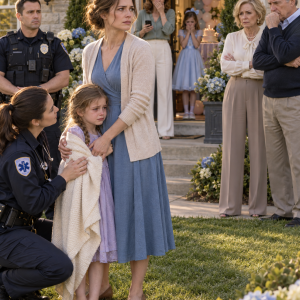
Caroline’s understanding changed during her second year at the Philadelphia center when a five-year-old girl named Lily arrived with her mother. A dark vascular birthmark extended across the child’s left cheek, and repeated teasing had made her hide behind a lavender scarf.
While Lily’s mother completed intake forms, the child watched Caroline arranging folders near the reception desk.