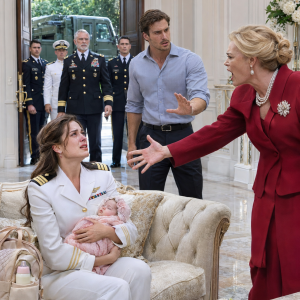
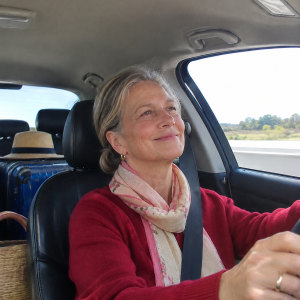
Natalie faced him from her wheelchair.
“I did not dilute the medication, rewrite the charts, assault a pharmacist, forge consent, or force a witness across state lines. If the truth destroys what you built, then public service was never what you built.”
Part Four: The Names Behind the Lot Numbers
The board suspended Pike and Webb before law enforcement arrested them. Investigators also detained purchasing officials and distributor executives, while court orders froze merger activity and connected accounts.
The inquiry found five deaths and nineteen preventable complications across Colorado and Wyoming. Supervisors had blamed nurses and threatened anyone requesting outside testing.
Relatives visited Natalie with photographs, medication lists, and difficult questions. She promised no chart would remain protected from review.
Tessa visited after completing interviews with investigators.
“I almost ignored your hand signal because Price sounded so confident when he described you as delusional,” she admitted. “Then I remembered that truly safe guardians never fear a private question.”
“You gave me something more valuable than immediate rescue,” Natalie replied. “You gave him enough time to explain the entire operation.”
Price cooperated after learning Pike intended to portray him as a rogue employee. His testimony identified hidden medication stock, false labels, and cash ledgers.
Pike’s personal messages revealed that he had ordered Natalie moved before the board hearing because the proposed merger contained a substantial executive payout. One message described her as “a dosage problem requiring permanent adjustment,” while another instructed the behavioral center to keep her sedated until the transaction closed.
Webb had altered medical records and mortality reviews, but his most damaging files contained rehearsed scripts for conversations with bereaved families. Each script replaced the possibility of contaminated medication with vague language about unavoidable deterioration.
At sentencing two years later, several relatives read the words physicians had used to dismiss their questions. Natalie spoke last, refusing to frame the case as a triumph belonging to one brave employee.
“Every person in this courtroom depended upon someone else noticing what power wanted hidden,” she said. “A technician preserved a sample, nurses documented unexpected reactions, an emergency medical technician recognized a silent signal, and families refused to accept rehearsed explanations. Accountability existed because their separate acts finally became one record.”
Pike received a lengthy federal sentence for health-care fraud, conspiracy, witness retaliation, unlawful detention, and obstruction. Webb lost his medical license and received additional penalties for falsifying records, while Price’s cooperation reduced but did not erase his sentence. The distributor’s executives were convicted through financial and shipping evidence.
Recovered money financed compensation and independent medical reviews, while a court-appointed monitor assumed pharmacy oversight.
Part Five: A Pharmacy Built Around Questions

Fourteen months after the ambulance interception, Natalie walked into the renovated central pharmacy without a wheelchair or cane. The false wall had been removed, leaving a glass consultation room where staff could report safety concerns directly to independent reviewers.
A memorial near the entrance displayed five names rather than anonymous incident numbers. Beneath them, an inscription promised that no financial interest could outrank a patient’s right to receive the medication prescribed.
Summit Ridge offered Natalie an executive position, generous settlement, and authority over public communications. She declined the publicity role but accepted appointment as independent director of medication integrity, reporting to a patient-and-community oversight council rather than hospital executives.
Her first reforms required external concentration testing, tamper-evident digital tracking, automatic preservation of adverse-event records, and protection for staff requesting independent review. No single executive could delete a complaint, alter a mortality analysis, or change a supplier without leaving a permanent audit trail.
At the reopening ceremony, Tessa stood beside Natalie near the newly numbered medication carts.
“Most passengers in my ambulance ask whether we have arrived yet,” Tessa said. “You started a criminal investigation beneath a blood pressure cuff.”
“I was trying to remain an exceptionally cooperative patient,” Natalie answered.
The families laughed gently, accepting the brief moment of relief without mistaking it for an end to grief.
Afterward, Natalie approached cart twenty-seven. Investigators had returned its empty metal frame after trial, and the pharmacy preserved it as a training exhibit. Behind the glass were the forged admission form, a replica data card, and the electrode backing upon which Tessa had written her first question.
A new pharmacist asked Natalie whether she ever regretted challenging Pike before securing stronger institutional support.
“I regret believing that persuasive evidence would automatically persuade people whose salaries depended upon ignoring it,” Natalie said. “However, waiting for perfect protection would have required patients to absorb the cost of everyone else’s caution.”
She explained that courage did not mean acting alone. Courage meant creating records, sharing them safely, recognizing allies, and understanding when survival mattered more than immediate confrontation.
Later that afternoon, Natalie met the daughter who had confronted Webb during the hearing. The woman carried her mother’s photograph and asked whether the new system could guarantee that nothing similar would happen again.
Natalie refused the comforting lie.
“No system can guarantee that every person will behave honorably, but this one makes dishonesty harder to hide and questions harder to erase.”
Before leaving, she placed her hand against the memorial wall. Pike had believed authority meant controlling which evidence received attention, while Webb believed medical language could transform preventable harm into unavoidable tragedy. Price believed a locked ambulance could carry a witness beyond the reach of anyone willing to listen.
They had all misunderstood the nature of silence. Silence was not always consent, surrender, or confusion; sometimes it was the interval in which a frightened person watched, preserved evidence, and waited for the safest moment to signal.
Natalie crossed the pharmacy as technicians prepared medication beneath bright observation lights. Every vial moved through scanners recording who touched it, what it contained, and where it would go. The process looked slower than the hidden night shift Pike had created, but safety was supposed to cost time.
At the door, Tessa returned the green electrode backing after prosecutors released it from evidence. The original message had faded slightly, although the words remained readable: SAFE TO CALL 911?
Natalie folded it beside the replica data card in the display.
“You never needed permission to make that call,” she told Tessa.
“Perhaps not, but I needed to remember that your fear mattered more than his confidence.”
Natalie watched Tessa leave before closing the display case. She had entered the old pharmacy believing her responsibility ended when she identified a dangerous medication. Everything afterward taught her that discovering harm was only the beginning; the harder duty involved protecting the truth from people trained to rename, relocate, and discredit it.
The final dose from cart twenty-seven never reached another patient. Instead, it became evidence that crossed an ambulance, entered a public hearing, and returned as a safeguard built into every medication cart that followed.
This time, nobody needed executive permission to ask what was inside.
THE END