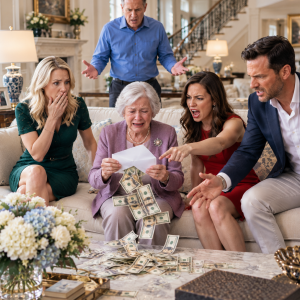
Julian looked at me with genuine confusion. His family knew my mother had left assets, but they never examined their scale because they considered me an ornamental wife who handled donor dinners. The Kingsley Trust quietly financed neonatal units, medical research, family housing, and pediatric surgery programs throughout New England.
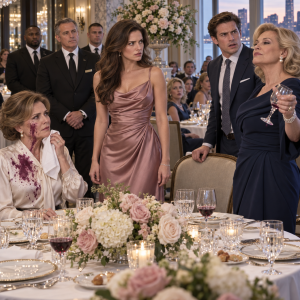
Under the foundation bylaws and funding agreements, I held decisive appointment rights after documented governance violations. Naomi entered the ballroom with outside counsel and delivered notices confirming an independent audit, Julian’s suspension from foundation activity, and Harrison’s removal as chair pending the scheduled board vote.
“You possess no authority to dismantle my institution,” Harrison shouted.
Naomi answered calmly. “The institution survives because Mrs. Caldwell’s trust finances it. Tonight she is protecting it from your family’s undisclosed liabilities.”
Sloane stared around the room, finally understanding that she had entered the wrong gala expecting an easy conquest. Before she could retreat, her expression tightened and she doubled forward with a genuine contraction.
Part 3 — The Man in the Raincoat

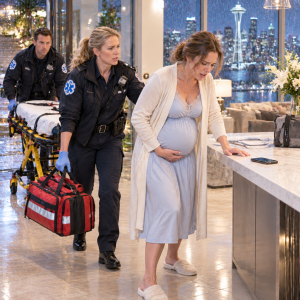
Sloane went into active labor at 9:27 p.m. Her staged performance dissolved into real pain as guests moved backward and Julian reached for her. She pushed his hands away, accusing him of touching her like someone ashamed to be seen beside her.
The child remained innocent, regardless of every adult failure surrounding his arrival. I instructed Naomi to notify the hospital, protect the emergency entrance from reporters, and separate the insurance investigation from necessary medical treatment. An ambulance transported Sloane through the service exit, with Julian accompanying her.
I followed in my own car because truth still required protection. Rain turned the streets of Boston into dark mirrors while my driver, Thomas, maintained the loyal silence he had practiced since working for my mother years earlier.
At Beacon Maternity Center, Julian paced outside the delivery unit with his tie loosened and his public confidence gone. He told me I should leave, so I reminded him that the Kingsley Trust had financed the neonatal wing and continued supporting several programs inside the building.
He called the affair a mistake and claimed loneliness had distorted his judgment. I reminded him that mistakes included missed flights and poor investments, whereas maintaining a second relationship for eight months involved hundreds of deliberate choices.
“I do not even know whether the baby is mine,” Julian finally whispered.
Sloane had been involved with another man before their affair, but she swore the timing favored Julian. He did not know the man’s identity, which meant he had risked our marriage, the foundation, and my public dignity for a paternity claim nobody had verified.
The elevator opened before I could answer. Naomi emerged beside a tall man wearing a rain-soaked coat, followed by an older woman who was visibly crying. I recognized him from a veterans’ health initiative funded by our foundation.
Dr. Owen Brooks was a former United States Marine, a trauma surgeon, and the son of Massachusetts Governor Thomas Brooks. Eight months earlier, he had delivered a keynote address at a Caldwell resort conference where Sloane managed guest relations.
“Where is she?” Owen asked, struggling to contain his panic.
Naomi directed him toward the delivery unit. Julian stepped into his path and demanded an explanation. Owen revealed that Sloane had telephoned from the ambulance after ignoring his messages throughout the day.
A nurse entered the corridor and announced that Sloane requested Owen as her sole support person. Julian appeared physically shaken.
“Is that child yours?” he demanded.
Owen looked directly at him. “I do not know, but I came here to establish the truth before attaching my name to a child.”
Harrison arrived with private security and froze upon recognizing Owen. Naomi quietly explained that the governor’s legal office had contacted her. Owen had already filed an emergency parentage petition seeking to prevent an unsupported acknowledgment of paternity until testing could occur.
Sloane had attended the gala not only to humiliate me but also because Owen refused to disappear. She needed Julian publicly established as the father before another man could challenge the story that promised her entry into the Caldwell dynasty.
The baby was born at 1:14 a.m., healthy and furious, with dark hair and powerful lungs. His cry traveled into the corridor and silenced every calculation surrounding him. The smallest person in the building was the only one who had done nothing wrong.
Owen emerged first with rolled sleeves and reddened eyes. He said the boy was beautiful, while Julian sat against the wall staring into the distance. Hospital administrators postponed any voluntary acknowledgment naming a father until the legal and scientific questions were resolved.
When Sloane later entered the discussion, she admitted that Owen had requested testing when she first announced the pregnancy. She interpreted caution as rejection and chose Julian because his promises offered status, money, and an immediate surname.
“Julian promised we would live together after the gala season ended,” she insisted.
Julian shook his head. “I promised affection because I enjoyed the person I became when you admired me. I never promised you my wife’s home or her foundation.”
His honesty arrived too late to become honorable. Owen said testing would determine his responsibilities and that the child’s welfare mattered more than either romantic relationship.
Two days later, court-authorized DNA results identified Owen as the biological father and excluded Julian. Owen and Sloane did not become a couple, but attorneys helped them establish a responsible parenting arrangement that protected their son from further public exploitation.
Part 4 — What Remained After the Name Changed
Video from the gala circulated rapidly despite my refusal to release it. Headlines focused on the white dress, hospital form, disputed fatherhood, and sudden reversal of foundation control. Reporters described my actions as revenge, although revenge is emotional and impulsive. What I conducted was an accounting.
Julian resigned from every foundation position, while the hotel board placed him on indefinite leave. Harrison retired after the audit uncovered repeated conflicts and attempts to use charitable influence for family reputation management. Celeste left for their Florida residence without contacting me.
Sloane disappeared from social media and lost her branding position after the hotel company determined that she had misused internal access and falsely represented household information. I did not celebrate her collapse because she had mistaken proximity to power for love, a mistake that harmed several people and nearly turned her child into evidence of conquest.
Julian returned to the penthouse on a gray Sunday to collect his belongings. Divorce documents waited on the library desk inherited from my mother. He said he had loved me, and I believed him in the limited way some men love valuable art: they admire, display, and expect it to remain wherever they placed it.
“You loved me when my composure protected your image,” I said. “You loved my patience because it translated selfishness into stress and betrayal into loneliness. Love that requires a woman to disappear is merely possession presented under flattering light.”
He asked what would become of him without the marriage, foundation, and family protection surrounding his identity.
“You will finally discover who you are when nobody converts your consequences into somebody else’s burden,” I answered.
Julian placed his key on the desk and left without another performance. Afterward, I opened the windows throughout the penthouse, allowing rain-cooled air and city noise into rooms designed more for admiration than living. I removed my wedding ring and placed it inside a blue ceramic dish beside the door.
Six months later, the Caldwell Children’s Foundation reopened under a new name and independent governance. The Kingsley House for Families occupied a renovated building in Roxbury, providing neonatal support, emergency surgical grants, temporary housing, and legal assistance for parents confronting intimidating medical systems.
Snow fell on opening morning while families entered carrying diaper bags, winter coats, and paper cups of coffee. Naomi stood beside me on the steps, pretending the cold rather than emotion had reddened her eyes. Thomas waited near the car and lifted one hand when I noticed him.
My telephone displayed a photograph from Owen. His son, Benjamin, wore a navy blanket and looked deeply offended by winter. The accompanying message thanked me for ensuring that the first finalized birth record reflected evidence rather than fear, ambition, or a powerful surname.
Another message arrived from Julian, congratulating me and saying my mother would have been proud. I deleted it without anger because every gentle knock does not require reopening a closed door.
For years, I believed dignity meant enduring humiliation beautifully, without raised voices or visible fractures. I eventually learned that dignity begins when another person can no longer profit from your silence. Sloane tried to write my husband’s name onto a form and use it to revise my life, while Julian believed privacy would protect him and Harrison believed money guaranteed control.
They underestimated how thoroughly a quiet woman can prepare while others mistake restraint for weakness. When I accepted reality, I did not collapse beneath it; I converted it into governance, protection, and doors that other families could enter without surrendering their dignity.
A woman may lose a husband without losing her heart, endure public betrayal without losing her name, and leave a powerful family without abandoning the work that once gave that family meaning. Sometimes a mistress writes a man’s name too early, and the truth arrives before the ink can become destiny.
THE END