Judith’s expression remained composed, but she had no answer. Preston claimed he only wanted Lily to become independent from an overprotective mother.
Lily laughed without humor.
“Your idea of independence is giving you control over my inheritance, my voting power, and my financial decisions.”
Preston reminded her of the guests, the wasted money, the publicity, and the embarrassment facing both families. Every argument involved appearances or assets. None involved trust.
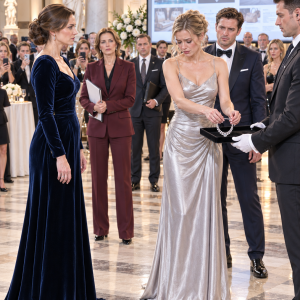
Lily slowly removed her engagement ring and placed it on top of the contract granting Preston’s company management authority.
“I will not sign these papers, and I will not marry someone who needed me isolated before I became useful.”
Preston’s face lost its color.
“You are destroying everything because your mother staged a tantrum. Without that eight-million-dollar residence, what exactly do you think happens next?”
His question ended the last of Lily’s emotional attachment. He had not mentioned love, commitment, or their future together. He had asked what remained without the house.
“Now I understand exactly what was supposed to happen next,” Lily said. “You wanted the residence, authority over my inheritance, and a marriage that made the acquisition look romantic.”
She walked toward the door while Preston demanded his ring back, as though jewelry could restore the power he had lost. Margaret followed silently. Saving Lily did not make heartbreak disappear.
Part 7 — The Documents Exposed the Scheme

The next morning, Nathan arrived with annotated copies of every agreement. His review confirmed that Preston’s paperwork was far more dangerous than ordinary marital planning. The clauses could have allowed companies controlled by the Hales to manage inherited property, arrange loans against it, influence future sales, and resist removal through expensive legal proceedings.
Nathan also confirmed that freezing the residence transfer before final execution had prevented an immediate ownership dispute. Lily became increasingly ashamed as every highlighted paragraph revealed another lie.
“You are not foolish because someone hid consequences beneath affectionate language,” Margaret told her. “Wisdom begins when you stop defending the deception.”
Lily asked whether Margaret intended to cancel the residence transfer permanently. Margaret considered the question carefully. Generosity could become another form of control if it depended on obedience.
“I will not withdraw it to punish you,” she said. “But the transfer will remain suspended until you know what you want without a wedding, a man, or an expensive gift making the decision for you.”
Lily rented a modest apartment in McMinnville with her own savings. She began working part-time at Briar Glen, starting with inventory records, vendor invoices, tasting-room schedules, and harvest projections rather than receiving a prestigious management position.
Margaret insisted that Lily learn every part of the operation. Inheriting a vineyard without understanding the labor behind it would only create another form of entitlement.
The work slowly restored Lily’s confidence. She learned how weather affected sugar levels, how equipment loans influenced seasonal cash flow, and why longtime employees distrusted owners who appeared only during picturesque harvests. Her business degree became useful in practice rather than remaining a credential Preston praised while discouraging her independence.
Judith sent formal letters threatening to damage Margaret’s reputation. Preston alternated apologies with accusations until Lily blocked his personal number. All further communication went through Nathan. The canceled wedding eventually disappeared from Portland society, because wealthy circles always found a newer scandal.
Part 8 — The Harvest That Survived
Several months later, winter covered the Willamette Valley beneath a silver sky. Margaret and Lily sat in the warm kitchen with two glasses of Briar Glen Pinot Noir. The canceled wedding was less painful to discuss, although neither woman pretended it had been harmless.
“Do you regret stopping everything without warning me?” Lily asked.
Margaret rotated her glass between her hands.
“I regret that you were hurt in public, but I do not regret interrupting a plan designed to make that humiliation permanent.”
Lily looked toward the dark windows.
“I still remember you saying that I would receive exactly the wedding I had chosen.”
“That was harsher than I would speak today.”
“Maybe, but it became true once I understood what kind of wedding Preston believed I deserved.”
Margaret raised her glass.
“Then let us drink to the marriage you were fortunate enough to avoid.”
Lily laughed so unexpectedly that she nearly spilled her wine. Her laughter moved through the kitchen where Robert’s handmade chairs remained sturdy after twenty-five years, their scratches proving that usefulness mattered more than perfection.
Margaret had once believed Briar Glen’s strength came from its valuable acreage, famous wine, and expensive stone residence. She now understood that its true strength came from roots protected beneath the soil. Vines survived careful pruning because removing harmful growth allowed healthier branches to develop.
The Hales had tried to separate Lily from her mother, turn inheritance into corporate control, and disguise acquisition as romance. Their elaborate wedding disappeared within hours once Margaret withdrew the property, money, and silence supporting it. What remained was less glamorous but far more durable: informed choice, honest work, and a relationship strong enough to survive the truth.
The following morning, Lily joined Luis to inspect drainage along the northern slope. Margaret watched from the porch as her daughter carried muddy boots instead of bridal heels and asked practical questions. The stone residence still stood beyond the dormant vines, legally untouched but emotionally changed.
Perhaps Lily would live there someday. Perhaps Margaret would turn it into a guesthouse, educational center, or residence for seasonal workers. For the first time, the future did not require an immediate decision. Waiting no longer meant fear. It meant freedom from choices designed by someone else.
Back inside, Margaret found the forgotten pearl comb beside the telephone. She placed it carefully in a drawer instead of treating it as a symbol of disaster. Perhaps Lily would wear it at a smaller ceremony someday, beside someone who respected the woman who raised her.
Until then, the comb and the vineyard could wait for a future that asked permission before claiming either one.
THE END