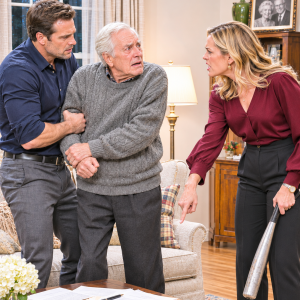
“She’s also connected to a significant estate.”
“I know.”
“So you understand why we’re being cautious.”
“I’d be concerned if you weren’t.”
Rebecca folded her hands.
“What exactly are you requesting?”
Nathan glanced at Molly.
“Temporary placement while you evaluate longer-term options. And I want every financial decision regarding her inheritance completely separated from me.”
Rebecca lifted an eyebrow.
“Completely?”
“Independent trustee. Court oversight. No access through me or my firm.”
That seemed to matter.
Still, Rebecca remained careful.
“Why?”
Before Nathan answered, Molly spoke.
“He didn’t know who my dad was when he bought me dinner.”
Rebecca turned toward her.
“I know.”
Molly continued.
“And I want to stay with him.”
“Can you tell me why?”
The girl clasped her hands together.
For several seconds she said nothing.
Then:
“Because he asks me before he decides things about me.”
Nathan looked away.
He did not want Molly to see how deeply those words landed.
The evaluation process began.
There were interviews, home visits, background checks, meetings with psychologists, and discussions with Molly’s maternal grandmother, Margaret Bennett, a seventy-four-year-old widow living outside Worcester.
Margaret loved Molly fiercely but had serious heart problems and limited mobility. She could manage short visits, not the constant physical demands of raising a child alone.
Meanwhile, the story reached the press.
One headline asked whether Nathan Whitmore had rescued his rival’s daughter out of compassion or ambition.
Another described Molly’s inheritance in unnecessary detail.
Nathan knew almost immediately who had an interest in keeping suspicion focused on him.
Charles Mercer.
Mercer had served as Andrew Bennett’s chief operating officer and had taken temporary control of the company after Andrew’s passing.
For nearly a year, he had overseen daily operations while lawyers worked through the estate.
Within days, Mercer formally opposed Nathan’s placement request.
His proposed solution sounded responsible on paper: Molly would live with a licensed foster family while professional managers continued overseeing the Bennett assets.
At a meeting between attorneys, Nathan asked one question.
“Who are these professional managers?”
Mercer adjusted his cuff.
“The existing leadership structure, along with outside advisers.”
“Meaning you.”
“Meaning qualified people who understand the company.”
Nathan leaned forward.
“She’s eight.”
“Exactly why financial professionals should protect her interests.”
“Financial professionals can protect her money. They don’t get to become her family.”
Mercer’s expression barely changed.
“And you think you should?”
Nathan had no answer to that yet.
That same night, his doorman called shortly before ten.
An elderly woman was waiting downstairs.
Margaret Bennett entered Nathan’s apartment using a cane.
Molly flew across the room when she saw her.
“Grandma!”
Margaret held her for a long time.
Later, after Molly had gone to bed, Margaret sat with Nathan at the kitchen table.
She removed an envelope from her handbag.
“Charles Mercer visited me yesterday.”
Nathan said nothing.
“He wanted me to sign a statement saying I believed you were dangerous to Molly’s future.”
“Did you?”
Margaret gave him an irritated look.
“Do I look easily bullied?”
Nathan wisely chose not to answer.
She placed the envelope between them.
Inside was a letter written by Andrew Bennett several months before the accident.
Andrew described growing concerns about several executives who were approving unusually generous consulting agreements and related-party transactions.
More importantly, he wrote that if he were ever unable to oversee the company himself, he wanted Molly’s assets protected by an independent fiduciary.
No operating executive was to have unchecked control over her inheritance.
Nathan read the letter twice.
“Does Mercer know you have this?”
“I don’t think so.”
Margaret tapped the page.
“There’s something else. Since Andrew was gone, I’ve asked several times for full reports about the estate. They kept giving me summaries. Whenever I asked questions, somebody told me it was too complicated.”
Nathan looked at her.
“Did you believe them?”
Margaret almost laughed.
“Nathan, I’m old. I’m not decorative.”
The following morning, Nathan’s attorneys petitioned for an independent forensic audit.
The first findings arrived within days.
Large consulting fees.
Unusual transfers.
Contracts involving firms connected to members of Bennett Holdings leadership.
None of those findings, by themselves, proved what Mercer had intended.
But they changed the question.
Perhaps Charles Mercer was not trying to protect Molly from Nathan.
Perhaps he was trying to prevent Molly’s estate from being protected from him.
What Molly Wanted
On the morning of the placement hearing, Molly barely touched breakfast.
Nathan found her at the kitchen island moving blueberries around a bowl.
“You’re awfully quiet.”
“They’re deciding where I live today.”
“Partly.”
“What if they say I can’t come back here?”
Nathan sat beside her.
In the weeks since meeting Molly, he had learned that reassurance required precision.
She had heard too many adults say everything would be fine moments before her entire life changed again.
So he did not make promises he could not control.
“They might need more time. They might add conditions. But I’m going to do everything I’m legally allowed to do to make sure you have a stable place.”
Molly nodded without enthusiasm.
Nathan continued.
“There’s something else you should know. My lawyers filed documents making sure I can never manage your parents’ money.”
That got her attention.
“Never?”
“Not while I’m responsible for you.”
“What if you need it?”
Nathan laughed softly.
“I don’t.”
She gave him a skeptical look.
“Your apartment has two refrigerators. I already figured that out.”
He smiled.
Then Molly asked the question he had been avoiding.
“Why are you doing this?”
At first, Nathan had thought the answer was simple.
Because she needed help.
Later, he wondered whether he was trying to prove something about himself, perhaps even to make peace with the uncomfortable fact that he had spent years treating achievement as though nothing else deserved equal attention.
But somewhere between buying school supplies, learning which cereal Molly liked, sitting through a parent meeting he never expected to attend, and discovering that she slept better when the hallway light remained on, the answer had changed.
“Because when you’re not here,” he said, “the place feels wrong.”
Molly stared at him.
“Wrong how?”
“Too quiet.”
She looked back at her blueberries.
“Oh.”
Nathan waited.
“That’s all?”
“I don’t know what you’re supposed to say to that.”
“Nothing.”
A few seconds passed.
Then she whispered:
“It’s too quiet when you’re gone too.”
Nathan pretended to be very interested in his coffee.
The Hearing
The proceeding was private, although reporters crowded the sidewalk outside the building.
Inside the room sat caseworkers, attorneys, evaluators, Margaret, Molly, Nathan, and Charles Mercer.
Mercer arrived in a perfectly fitted charcoal suit, looking like the sort of man who expected rooms to become orderly when he entered them.
His attorney spoke first.
He acknowledged that Nathan had helped Molly during a difficult moment, but argued that Nathan’s history with Andrew Bennett created an unavoidable conflict.
A licensed foster placement, he said, would provide stability while keeping Molly away from competing corporate interests.
Nathan’s attorney asked one simple question.
“Who would continue administering the assets?”
“The present fiduciary and management structure, subject to appropriate safeguards.”
“Including Mr. Mercer?”
A pause.
“Among others.”
When Nathan’s turn came, he stood without notes.
“Andrew Bennett and I were competitors. That’s public information. We disagreed strongly, and my company eventually won a major project his company wanted.”
He glanced at Molly.
“I also now know what Molly will inherit.”
Mercer watched him carefully.
“But I didn’t know any of that when she approached my table. Restaurant cameras show her entering from the sidewalk. Employees heard her ask for food. My first calls regarding her identity happened afterward.”
Nathan turned toward the panel.
“You can question every choice I’ve made since then. You should. But you cannot turn a hungry child asking for dinner into a business strategy simply because adults later discovered her last name.”
The room became very still.
The chairwoman asked, “What authority are you requesting over Molly’s assets?”
“None.”
Mercer shifted in his seat.
Nathan continued.
“I want her inheritance placed under an independent trustee with court oversight. No connection to my company. No connection to Bennett Holdings management. If I’m approved to care for Molly, I want responsibility for her homework, doctor’s appointments, school plays, and the argument we’re apparently going to have about whether nine-year-olds need phones.”
Molly whispered, “We are definitely having that argument.”
A few people smiled.
Nathan looked at her.
“See?”
Then his attorney stood.
He submitted the preliminary audit findings.
A recently authorized transfer had directed several million dollars from an entity partly belonging to Molly’s estate into a consulting company with ties to one of Bennett Holdings’ senior directors.
Mercer’s signature appeared on the authorization.
The chairwoman studied the document.
“Mr. Mercer, is this your signature?”
“I sign numerous operational documents.”
“That wasn’t my question.”
His composure slipped slightly.
“Yes.”
His attorney immediately argued that corporate accounting had nothing to do with Molly’s personal placement.
Nathan answered quietly.
“It becomes relevant when the person asking you to remove me claims he’s doing it to protect her financial interests.”
The panel did not attempt to resolve the corporate matter that day. They referred the documents for further review and recommended that all parties with direct business interests be removed from sole control of Molly’s assets.
Then Margaret Bennett was called.
Asked why she was not requesting full-time custody herself, she answered without hesitation.
“Because loving my granddaughter doesn’t magically make me thirty years younger.”
She rested both hands on her cane.