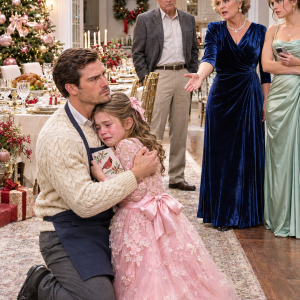
“Grandma, Mommy says you’re mad at us.”
I knelt beside her and straightened the collar of her shirt.
“I’m not mad at you, sweetheart. Grandma just needs a place of her own.”
“But who’s going to make your coffee in the morning?”
I laughed despite the tears gathering in my eyes. Sophie occasionally brought me a cup of coffee on Saturday mornings, carefully carrying it upstairs with both hands.
“I’ll manage, honey. And you can come visit whenever we arrange it with your parents.”
She hugged me so tightly that I had to close my eyes.
Andrew watched from the hallway. When I finally carried Julian’s wooden box of letters toward the front door, he offered to help.
“Mom, you know I love you.”
I nodded.
“I needed you to remember that at the restaurant, Andrew. Not after you found out how much money I had.”
He stood beside the doorway as I walked outside.
Melissa didn’t come out to say goodbye.
They Used My Husband’s Memory Against Me
I spent my first evening at Willow Creek sitting on the porch with a cup of coffee. I hadn’t purchased the largest house I could afford. I’d purchased a place where I could wake up looking at trees and nobody would complain if I spent an afternoon reading instead of doing laundry.
The following morning, Andrew appeared carrying a brown folder.
“Mom, Melissa found something in your old paperwork. It’s a copy of Dad’s will.”
I invited him to explain, but I didn’t invite him inside.
The document contained a provision I’d never seen, supposedly restricting my ability to sell the former family home under certain circumstances. Andrew explained that Melissa believed the document could create legal problems concerning the sale.
“What exactly does she want?”
He looked toward the driveway.
“She says if you let us stay in the rental house and help us purchase another property, we won’t need to pursue it.”
I examined Julian’s supposed signature. My husband had spent his final months making sure I understood that everything we’d built together was intended to protect me.
Now my own son was standing on my porch, using his father’s memory to pressure me for money.
“Andrew, do you understand what you’re asking me to do?”
“I just want everybody to stop fighting.”
“Then why are you bringing me a threat instead of an apology?”
He couldn’t answer.
I photographed the document and called Patricia. She arranged a meeting at her office for the following Monday, explaining that we needed to compare the questionable document with the authentic estate records.
Andrew agreed to attend. Melissa insisted on coming, too.
For the first time since moving into their house, I was actually looking forward to a conversation with my daughter-in-law.
The Meeting Melissa Thought She Would Win
Melissa arrived at Patricia’s office wearing an expensive cream-colored jacket and carrying the same brown folder Andrew had brought to my porch. She sat across from me and immediately began explaining how unfairly she’d been treated.
“Julian would’ve wanted his son and grandchildren taken care of. Teresa knows that. She’s just choosing to punish us because of one unfortunate conversation at a restaurant.”
Patricia placed a certified copy of Julian’s authentic will on the table.
“Mrs. Bennett, where did you obtain the document you’re relying on?”
“It was among Teresa’s personal belongings.”
“And when did you find it?”
Melissa hesitated.
“Recently. I don’t remember the exact date.”
Patricia opened the authentic will and explained that the provision Melissa was relying on didn’t exist in the properly executed document. She then produced the disputed financial support letter submitted with their purchase application.
“Mrs. Bennett, my client also disputes this signature. Can you explain how this letter was obtained?”
Melissa’s confidence began slipping.
“Teresa had always talked about helping us. We understood that she was willing to contribute.”
“That isn’t what I asked. Did she sign this document?”
Melissa looked at Andrew.
“We were trying to get the application moving. Everything would’ve been sorted out afterward.”
Andrew rubbed his forehead.
“Melissa, I told you not to use the second document until we knew whether Mom would agree to help.”
The room went silent.
Melissa turned toward him.
“Andrew!”
I stared at my son.
“You knew?”
He looked as though he’d only just understood what he’d admitted.
“Mom, I didn’t make the document. I swear I didn’t. Melissa said it might give us some leverage, and I thought we could work something out before it became a real problem.”
I felt tears running down my cheeks. This time, I didn’t bother wiping them away.
“Your father trusted you, Andrew. He used to tell me that if anything ever happened to him, you’d make sure I was all right.”
Andrew lowered his head.
“I’m sorry, Mom.”
“He would’ve been so disappointed to see you sitting here.”
Melissa began insisting that everything had gotten out of hand and that nobody had intended to cause permanent harm. Patricia interrupted her, explaining that the disputed documents would be preserved and the appropriate reports would proceed independently of any family settlement.
Melissa turned toward me.
“You’re actually going to let this happen to us?”
I gathered my purse.
“I didn’t create those documents, Melissa. And I’m not going to pretend you didn’t, just because you’re married to my son.”
Andrew followed me into the hallway, but I asked him to give me some time.
He finally listened.
What Forgiveness Didn’t Buy
Andrew and Melissa accepted the written move-out arrangement and relocated to a modest apartment. They sold one of their expensive vehicles and began addressing the debts they’d previously expected me to resolve.
The disputed financial documents were formally rejected. Melissa eventually acknowledged her involvement through the legal process and faced the consequences of her conduct. I didn’t interfere, pay her legal expenses, or agree to conceal what had happened.
Andrew continued bringing the children to visit. For several months, our conversations remained polite and uncomfortable.
One Sunday, while Sophie and Matthew played in the garden, he finally told me something I’d been waiting to hear.
“When I found out you’d won the lottery, the first thing I thought was that you could save us. I didn’t even think about how we’d treated you. I don’t know when I became that kind of person, Mom.”
I appreciated his honesty, but I told him that rebuilding our relationship would take considerably longer than admitting what he’d done.
Melissa came to see me almost a year after I moved.
She stood on the porch, looking considerably less confident than the woman who’d once announced my departure over lunch.
“I used to think that if I pressured you enough, you’d eventually give us whatever we wanted. You always did before.”
“I know.”
“I’m ashamed of what I did.”
I invited her inside for coffee. We talked for nearly an hour, and although I accepted her apology, I made it clear that she would never again have access to my financial information or participate in decisions concerning my property.
I’d established independently managed education funds for my grandchildren. Andrew and Melissa would receive no house, no debt repayment, and no financial reward for rebuilding their relationship with me.
For once, Melissa didn’t argue.
Nobody Takes Up Too Much Space Here
Over the following two years, I began working with local organizations that supported older adults experiencing financial exploitation, loneliness, or housing insecurity. With professional guidance, I established a charitable initiative in Julian’s memory.
We started with Saturday lunches, financial education workshops, and assistance connecting older women with appropriate temporary housing services.
I called it Julian House.
Andrew occasionally volunteered to repair furniture or help maintain the garden. He never asked for payment, and gradually, our conversations stopped revolving around what I could do for him.
On my seventy-fourth birthday, he arrived carrying a small shopping bag.
Inside was a pale blue cardigan.
“I remember Dad always liked you in this color,” he said.
I ran my fingers across the soft fabric. Andrew didn’t know that I’d once returned a nearly identical cardigan because he and Melissa had made me feel guilty about spending thirty-eight dollars.
This time, I kept it.
That afternoon, Sophie brought me a handmade sign decorated with little yellow flowers.
Julian House — Nobody Takes Up Too Much Space Here.
I asked Andrew to hang it beside the front door, beneath the little hook where I kept my brass key.
When our first guests arrived for Saturday lunch, I put on my new cardigan, took the key from its hook, and opened the door.
An elderly woman stood on the porch holding a homemade apple pie. She looked around nervously before asking whether she was too early.
“Oh, sweetheart, you’re right on time,” I told her.
Behind me, Andrew was setting another place at the dining room table.
And this time, nobody asked the woman standing in the doorway when she planned to leave.