The Agreement He Couldn’t Sign Fast Enough

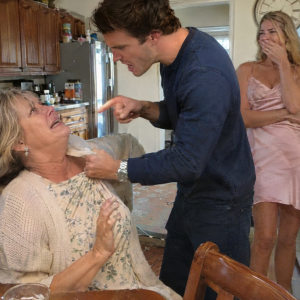
My husband was already reaching for his car keys when the attorney reminded him that there were still two documents requiring his signature, and the impatient expression that crossed his face told me more about the state of our marriage than anything he had said during the previous three months.
“Can we please finish this, Meredith? Vanessa has a doctor’s appointment this afternoon, and I’ve already wasted half my day.”
We were standing outside a family courtroom in Portsmouth, New Hampshire, where our marriage of nine years was about to become a collection of certified documents, financial agreements, and carefully arranged parenting schedules.
Our seven-year-old daughter, Abigail, was sitting farther down the hallway with my neighbor, holding a stuffed rabbit against her chest and swinging her little feet beneath a wooden bench.
My husband, Bradley Prescott, had agreed that Abigail would live primarily with me in Gloucester, Massachusetts, where I intended to establish a new home and take responsibility for the commercial fishing business my grandfather had left me.
I would receive the proceeds from the sale of our marital home, while Bradley would retain ownership of his three upscale physical rehabilitation centers and assume responsibility for their outstanding financial obligations.
His mother, Lorraine, stood beside him in an expensive camel-colored coat, regarding me with the familiar expression of disappointment she had perfected over the years.
“I hope you understand what you’re giving up,” she remarked. “A little fishing business isn’t going to provide the kind of childhood Abigail deserves.”
I glanced toward my daughter, who was carefully straightening the ears of her rabbit.
“I think what she deserves most is a mother who doesn’t spend every day feeling unwelcome in her own home.”
Lorraine looked offended, but Bradley merely checked his phone.
Earlier that morning, the judge had confirmed that both of us understood the settlement, including the relocation arrangements and the financial disclosures our respective attorneys had exchanged. Bradley had answered every question confidently, seemingly relieved that I wasn’t requesting ongoing spousal support or attempting to claim part of his companies.
My attorney, Margaret Ellis, placed the finalized documents inside a navy-blue folder and reminded me to keep several certified copies.
“You’ve done everything properly,” she told me. “Don’t allow anyone to convince you otherwise simply because they regret their decisions later.”
At the time, I appreciated her reassurance without fully understanding why she considered it necessary.
When Abigail finally came over, I crouched beside her and opened my arms.
“Are we going to Grandpa’s house now?” she whispered.
“We certainly are, sweetheart.”
“And I can have the bedroom where I can see the ocean?”
I promised her that she could.
Bradley watched us briefly before turning toward Vanessa, the woman who was expecting what he believed was his second child.
As I gathered our belongings, I noticed that his copy of my financial disclosure remained unopened beneath his car keys.
Everything he would eventually accuse me of hiding was contained within those pages.
He simply hadn’t considered my future important enough to read about.
The Evening Our Marriage Changed
Three months earlier, I had been sitting at our kitchen island sewing a loose button onto Abigail’s school cardigan when Bradley announced that Vanessa was pregnant.
There was no apology preceding the announcement, no attempt to explain how long their relationship had been going on, and certainly no acknowledgment of the years I had spent supporting him while he established his businesses.
“She’s almost ten weeks along,” he explained. “I can’t walk away from my responsibilities, Meredith. I need to be there for her.”
I placed the cardigan on the counter and looked at the man with whom I had once discussed growing old.
“And what about your responsibilities to the little girl sleeping upstairs?”
He sighed as though I had deliberately complicated an otherwise straightforward conversation.
“Abigail will always be my daughter. That doesn’t mean we have to stay married.”
There was something else I couldn’t reconcile with his announcement, although I hesitated before mentioning it.
More than a year earlier, Bradley had undergone a vasectomy, and his subsequent medical examination had confirmed that the procedure had been successful. I remembered driving him home, preparing his meals during his recovery, and filing the medical paperwork alongside our other important household records.
“Have you discussed the pregnancy with your doctor?” I asked carefully.
His expression immediately changed.
“Vanessa and I have already talked about that. Sometimes those procedures fail, and I’m not going to let you make this into something ugly.”
I could have argued with him, but there seemed little dignity in persuading a man to question the very circumstances he was using to justify leaving his family.
Instead, I told him that we should each find an attorney.
Later that evening, Abigail appeared in my bedroom doorway wearing her pajamas, her rabbit tucked beneath one arm.
“Mommy, if Daddy has another baby, will he still want me?”
I lifted the covers and invited her to climb beside me, struggling to find an answer that would comfort her without making promises on someone else’s behalf.
“Nobody can take away your place in this family, honey. You don’t have to earn the right to be loved.”
She fell asleep against my shoulder, and I remained awake for several hours, thinking about the life I would need to build for us.
My grandfather, Walter Bennett, had passed away the previous autumn, leaving me his commercial fishing operation on the Massachusetts coast. The inheritance included a forty-three-foot lobster boat, a waterfront property with a working dock, commercial equipment, and valuable fishing permits whose transfer required regulatory approval.
Bradley knew about the inheritance, although he generally referred to it as my grandfather’s collection of old boats and fishing gear.
What he apparently hadn’t understood was that the entire operation had been professionally appraised at approximately $2.9 million.
It wasn’t money sitting conveniently in a savings account, but an established business that had taken my grandfather more than four decades to build.
Before marrying Bradley, I had served eight years in the United States Coast Guard, where I gained experience in maritime operations, navigation, and safety procedures. After leaving active service, I worked as a coastal environmental compliance specialist, which gave me additional knowledge of the regulations governing commercial waterfront operations.
Although I wasn’t an experienced lobster captain, I understood enough about the industry to recognize the opportunity my grandfather had entrusted to me.
When I explained everything to Margaret, she insisted that we disclose the inheritance completely, including the appraisal and the conditions surrounding the fishing permits.
“We’re not going to give anyone an opportunity to suggest you concealed something,” she explained. “Your husband’s attorney will receive every relevant document, and we’ll retain written confirmation.”
The complete valuation appeared on the seventh page of my financial statement.
Bradley received it, acknowledged receiving it, and subsequently signed the settlement.
He was so eager to begin his new life that he never asked me a single question about the figures.
Learning to Stand on My Own

Abigail and I arrived in Gloucester on a cold March afternoon, when the fishing boats were returning to the harbor and the wind carried the familiar scent of saltwater through the narrow streets.
My grandfather’s longtime deckhand, Raymond Foster, was waiting outside the little white house overlooking the water.
He had worked alongside my grandfather for nearly thirty years, and although his hair had turned silver and his knees occasionally complained about the weather, he possessed the steady competence of someone who had spent his life respecting the ocean.
He carried our suitcases inside before examining Abigail’s stuffed rabbit.
“Well, I suppose every fishing operation needs a supervisor,” he told her.
For the first time in weeks, my daughter laughed without hesitation.
The following months were considerably more demanding than I had imagined, because inheriting a business and knowing how to operate one were entirely different things.
There were insurance policies to review, maintenance expenses to calculate, permits to finalize, and commercial arrangements that required careful attention before I could assume responsibility for regular operations.
Raymond taught me patiently, although he never allowed my pride to interfere with the work.
“Your grandfather wasn’t born knowing how to do this,” he reminded me one morning. “He learned by listening, making mistakes, and showing up again the next day.”
An old family friend named Patricia helped care for Abigail during my early departures, and we established a formal arrangement that allowed me to compensate her fairly while maintaining a predictable routine for my daughter.
Gradually, the unfamiliar responsibilities became manageable, and the business began producing steady revenue under my supervision.
Meanwhile, Bradley married Vanessa less than three weeks after our divorce.
Abigail discovered the wedding photographs through a family member’s social media account, and I found her studying an image of the flower-covered ceremony with an expression I wished I could forget.
“Did Daddy forget to invite me?”
I called Bradley that evening and explained how confused she was.
“It was supposed to be a small wedding,” he replied.
“Bradley, there were nearly fifty people in those photographs. Your daughter shouldn’t have to discover important changes in your life by looking at someone else’s pictures.”
He promised to explain things during their next video call, but the call never happened.
As the weeks passed, his communication became increasingly inconsistent, until Abigail began asking me whether she should bother waiting beside the tablet on Sunday evenings.
Then, during one of their conversations, Bradley started asking her questions about my business.
“Daddy wants to know how much money you get when the boat comes back,” Abigail announced innocently.
I took the tablet and asked him to direct any adult questions to me.
Two days later, Lorraine called.
Her voice was noticeably different from the last time we had spoken.
“Nearly three million dollars, Meredith. You walked away from my son with nearly three million dollars.”
I explained that the figure represented the appraised value of an operating business rather than available cash, and that the entire inheritance had been disclosed before the divorce.
“You knew Bradley wouldn’t bother reading all that paperwork,” she accused.
“He had an attorney, Lorraine. I didn’t prevent either of them from reviewing it.”
She continued arguing that my inheritance should have been considered a family asset, despite having previously dismissed it as an impractical burden.
When the conversation ended, I contacted Margaret.
Within a week, Bradley had retained a different attorney, and the first formal challenge to our divorce settlement arrived.
Related Posts

My Husband Took Me to His Company’s Annual Gala in Miami, Looked His Boss Straight in the Eye, and Said, “Oh, She’s Not My Wife. She’s Just the Nanny.” When His Sister Poured Red Wine Down My White Silk Dress, I Begged Him to Stand Up for Me. Instead, He Pointed at the Floor and Snapped, “Get Down There and Clean It Up! Haven’t You Embarrassed Me Enough?” After Seven Years of Marriage, I Finally Stopped Making Excuses for Him. I Set Down the Napkins and Walked Toward the Stage. The Moment His CEO Handed Me the Microphone, My Husband’s Smile Disappeared. He Had No Idea Who He’d Just Humiliated in Front of the Entire Company.

Two Days Before Thanksgiving, My Mother Texted, “Only Well-Behaved Grandchildren Are Invited This Year. Leave Your Daughter at Home.” My 8-Year-Old Burst Into Tears and Whispered, “Mommy, I Promise I’ll Be Good.” I Had Spent Five Years Paying for My Family’s Holidays, but That Was the Last Straw. I Replied, “Enjoy Your Dinner,” and Quietly Canceled the Credit Card Funding Their $4,850 Feast. On Thanksgiving Evening, They Sent Me Photos, Bragging About How Much Better Dinner Was Without My Little Girl. I Sent Back a Single Photograph. Less Than an Hour Later, My Mother’s Frantic Calls Began—A Guest at Her Table Had Just Discovered Who Was Really Paying for Their Perfect Life…

My Baby Girl Was Born With So Much Hair That the Nurses Put It in a Tiny Ponytail, but My Mother-in-Law Took One Look at Her and Insisted We Cut It Off Before She Ever Saw Herself in a Mirror. I Refused. Two Days Later, I Came Home to Find Every Mirror in Our House Had Been Removed. That Evening, I Overheard My Husband Whisper, “She Hasn’t Noticed It Yet.” When I Lifted the Hair at the Back of My Daughter’s Neck, He Finally Showed Me a Photograph From More Than 30 Years Ago—and I Began to Understand Why His Mother Was So Desperate to Cut My Baby’s Hair…
At My Grandson’s Tenth Birthday Dinner, He Crossed the Line, and Instead of Correcting Him, My Grown Son Burst Out Laughing. My Daughter-in-Law Smirked and Said, “Oh, Get Over Yourself. Nobody Here Cares About Your Feelings.” I Quietly Picked Up My Purse and Went Home. Before Midnight, I Canceled a Payment I’d Been Making for Three Years. At 5:42 the Next Morning, My Son Called in a Panic. Funny How Quickly He Remembered I Was His Mother When He Needed Something From Me. For the First Time in Years, I Let Him Hear the One Word He Never Expected From His Mother: “No.”