The Night I Refused to Pay for Dinner

Part One: The Price of Keeping the Peace
For most of my marriage, I believed that keeping a family together meant knowing when to speak and when to remain quiet, even when the silence came at the expense of my own happiness, and it took one humiliating evening at an expensive restaurant in Charleston, South Carolina, for me to understand how much of myself I had surrendered in the name of love.
My name is Natalie Whitmore, and I was thirty-four when my husband, Ethan, invited me to dinner with his mother at one of the most elegant restaurants along Charleston’s waterfront. At the time, I owned a small commercial interior design studio, a business I had spent nearly eight years building from a spare bedroom into something that finally provided me with both financial security and a sense of purpose.
Ethan had once seemed proud of my accomplishments, although somewhere during our four-year marriage, his encouragement had gradually turned into criticism, and his mother, Patricia, had become increasingly comfortable treating my income as though it belonged to the entire family.
Patricia was a widow who lived in a beautiful house outside Mount Pleasant, drove a newer car than either of us, and somehow always seemed to need help paying for something. I had covered home repairs, unexpected expenses, and more family celebrations than I cared to count, mostly because Ethan insisted that supporting his mother was simply what decent people did.
That Friday evening, I arrived at the restaurant about fifteen minutes after them, having stayed late to finish a proposal for a hotel renovation project. Patricia greeted me with a thin smile, glanced at my simple navy dress, and remarked that she supposed I had been too busy working to make much effort with my appearance.
I smiled because that was what I had learned to do.
Throughout dinner, Patricia ordered freely, choosing the most expensive seafood dishes and encouraging Ethan to select a bottle of wine that cost more than my weekly grocery budget. Whenever I suggested something modest, she gave me the same indulgent look she might have offered a child who didn’t understand how grown people entertained themselves.
By the time dessert arrived, I had barely spoken.
Then the waiter placed the check beside Ethan, and without even looking at the amount, my husband slid the leather folder across the table toward me.
“Go ahead, honey. Take care of it.”
I opened the folder and stared at the total.
Two thousand four hundred and sixty dollars.
There were additional dishes, unopened bottles of wine, and several expensive items I had never seen brought to our table.
“Ethan, I’m not paying for all of this,” I said, keeping my voice low enough that the neighboring diners wouldn’t hear.
He looked at me with an expression I had come to recognize, the one that usually meant I was expected to reconsider before he became angry.
“Don’t start something in front of my mother.”
“I’m not starting anything. I didn’t order half these things, and nobody asked me whether I agreed to pay.”
Patricia gave a little laugh and leaned back in her chair.
“Well, Natalie, I suppose generosity has never been your strongest quality.”
I felt my cheeks grow warm, but instead of reaching for my wallet as I had done so many times before, I closed the folder and pushed it gently back toward my husband.
“Then I guess you’ll need to make another arrangement.”
For a moment, Ethan simply stared at me.
Then he picked up his wineglass and flung its contents across my face.
The cold wine soaked my hair, ran down the front of my dress, and splashed across the white tablecloth, while conversations around us faded into an uncomfortable silence.
“Pay the bill,” he said, his voice tight with anger, “or don’t bother coming home tonight.”
Patricia watched with a faint smile.
And as I sat there with wine dripping from my chin, something inside me finally became clear: I had spent years trying to avoid embarrassing my husband, while he had never hesitated to embarrass me.
I reached into my handbag, but instead of taking out my credit card, I picked up my phone.
Part Two: The Envelope Nobody Wanted Me to See
I asked the waiter to bring the restaurant manager and requested that someone preserve the security recording of what had happened at our table. When Ethan demanded that I stop making a scene, I told him quietly that I was no longer interested in protecting his reputation at the expense of my dignity.
The manager, a silver-haired gentleman named Thomas Bennett, approached with a clean towel and immediately offered to move me into a private room.
“Ma’am, would you like us to contact the police?”
I looked at Ethan, who was already preparing another explanation about how I had misunderstood his intentions.
“Yes, please. I’d like to make a report.”
While we waited, Thomas examined the restaurant’s ordering records and discovered that Ethan and Patricia had placed several expensive orders before I arrived, including bottles intended to be taken home.
Suddenly, I remembered Ethan insisting that I stop at the bank on my way to dinner, even though I had told him I already had my wallet.
It hadn’t been an ordinary family meal.
They had planned the expense before I ever sat down.
“You knew you were going to make me pay for everything,” I said.
Ethan avoided my eyes, while Patricia folded her hands with the practiced dignity of a woman accustomed to having the final word.
“Families share their blessings, Natalie. Your problem is that you’ve always thought too much about what belongs to you.”
Her words reminded me of a disagreement we had the previous weekend, when I refused to give her another large sum of money to support a struggling property venture she had started with a family acquaintance.
That same morning, I had noticed a pending transfer of $5,600 from our joint account to an unfamiliar business, and Ethan had dismissed it as a routine household payment.
Now, opening my banking application beneath the restaurant’s bright lights, I recognized the recipient as a company connected to Patricia.
“Ethan, why is money being transferred to your mother’s business?”
He leaned toward me.
“Put your phone away. We’ll talk at home.”
“I asked you a question.”
Before he could answer, Thomas returned carrying a cream-colored envelope that a server had found beneath my chair, partially hidden by the tablecloth.
My name was written across the front in Ethan’s handwriting.
Inside was a proposed agreement giving a newly established holding company controlling ownership of my design studio. The company’s listed managers were Ethan and Patricia, and the final page contained an empty signature line above my printed name.
Attached to the agreement was a handwritten reminder.
Get her to sign tonight. She’ll agree once she settles down.
I recognized Patricia’s handwriting from the countless birthday cards and household notes she had sent us over the years.
For several seconds, I could only stare at the paper.
The business I had built before meeting Ethan, the company that represented years of late nights, missed vacations, careful savings, and personal sacrifices, was apparently something they had decided they deserved to control.
When the responding officers arrived, I handed over the envelope and explained the circumstances surrounding the dinner, the financial transfer, and the proposed ownership agreement.
One officer, a woman named Rebecca Collins, listened carefully before asking whether Ethan had frightened me on previous occasions.
I wanted to give the answer I had given everyone for years, that he simply had a difficult temper and that marriage sometimes required patience, but the words no longer felt believable.
“Yes,” I admitted. “And I’ve been making excuses for him for a very long time.”
Related Posts

“GET OUT, MOM! YOU’VE LIVED HERE LONG ENOUGH, AND THIS HOUSE IS MINE NOW!” My Son Shouted Before Changing Our Gate Code and Locking My Wife Outside With Her Groceries and Heart Medication. When I Got Home, She Was Crying at the Gate While He and His Wife Were Inside Planning Renovations. I Didn’t Argue. I Used My Old Spare Key to Get Inside. But When I Found a Blue Folder in My Study, My Son Rushed Toward Me, His Face Pale, and Shouted, “DAD, DON’T OPEN THAT!” I Opened It Anyway—and the First Page Had My Wife’s Name on It.
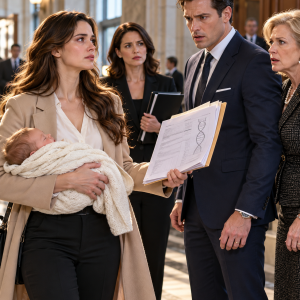
My Billionaire Husband Spent Months With Other Women, Then Smirked When He Divorced Me Before Our Son Was Born, Certain I Would Take His Money and Disappear—But When I Walked Into Court With Our Newborn, the DNA Test Confirmed His Heir, and My Late Father’s Trust Revealed One Name His Family Had Spent Years Trying to Hide

“STOP ACTING LIKE A CHEAP WIFE! PAY THE BILL OR GET OUT OF MY LIFE!” My Husband Snapped After His Mother Ordered Over $2,000 Worth of Food and Wine at a Luxury Restaurant. When I Refused, He Splashed Wine Straight Into My Face While She Laughed. I Didn’t Beg or Apologize. I Called the Police and Asked the Manager to Check Our Bill. But When He Revealed That Several Expensive Items Had Been Ordered Before I Arrived, I Opened My Banking App—and My Husband Suddenly Begged Me to Put My Phone Away.

At 2:27 A.M., My 79-Year-Old Father Held My Hand at the Police Station and Begged, “Don’t Take Me Home—and Don’t Tell Your Brother Where I Am.” Hours Later, I Discovered My Brother Was Trying to Take Control of Dad’s $11 Million Estate. Then $18,750 Appeared in My Account, and I Found My Signature on a Document I Had Never Signed…