“We’re asking for fairness, not revenge. Fairness means acknowledging what happened and correcting what we can. Revenge means wanting someone else to suffer because we suffered.”
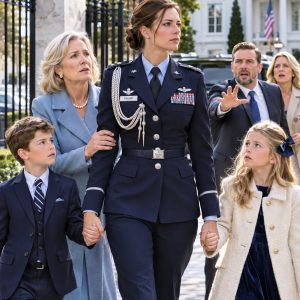
At the car, I asked why she had not told me she was coming. The school had invited her weeks earlier, and she had arranged leave after missing many of my events, the empty chairs I had quietly remembered.
“Were you embarrassed by what happened?”
Mom crouched until we were eye to eye.
“There is nothing embarrassing about being treated unfairly. You didn’t embarrass me, and you are never responsible for protecting my reputation by pretending someone hasn’t hurt you.”
She apologized for how she had phrased her rule. I should not use another person’s accomplishments to put myself above anyone, she said, but telling the truth was not showing off.
“I never wanted you to think you had to hide who your family is, or that defending yourself meant breaking one of my rules.”
“I thought you wanted me to stay quiet.”
“No. I wanted you to know you don’t have to impress people to matter. I should have explained that better.”
I asked if she would have been angry if I had called her for help. She said no; if I needed her, she would find a way to call back. Then I hugged her, and we stood beside the car until the light faded.
A note waited beside my cereal the next morning.
Be yourself. Tell the truth. And remember that asking for help is never weakness.
Underneath, Mom had drawn a lopsided drone crashing into a rosebush. I laughed despite dreading school.
At lunch, my white American classmate Bryce, who had laughed during my presentation, found me.
“Your mom really is a big deal.”
“She’s my mom.”
“You should’ve told us.”
“I did.”
His smile faded.
“Yeah, I guess you did. I’m sorry.”
I asked why he laughed.
“Everybody else was laughing.”
“That’s what made it worse.”
He nodded.
“For what it’s worth, I was being a jerk.”
“Yeah. You were.”
We did not become best friends, but he had finally looked at me as a person instead of a punch line.
A Lesson That Stayed With Me
Mr. Paulson apologized to the class for accusing me without checking and letting others laugh. My presentation had been reevaluated, and I had earned an A. The school met with witnesses and arranged classroom observations. I decided to stay in his class; I liked history and would not let one mistake decide where I belonged.
A week later Mr. Paulson returned my assignment with a note saying it had been thoughtful and that he had failed to recognize its value at first. I was not ready to pretend everything was fine, but I could see he was trying.
That Thursday, Mom was in the kitchen in an old Army T-shirt and fuzzy socks, arguing with a jar of pasta sauce.
“Owen, help me open this.”
“You’re a Special Forces commander.”
“Former assignment, current problem.”
She handed me the jar.
“Leadership is knowing when to delegate.”
After I got the lid loose, I raised the jar.
“Mission accomplished.”
“Outstanding work, soldier.”
We laughed, and I noticed her wooden box on the counter. It held letters, old photographs, a folded flag from a retirement ceremony, and a few challenge coins. I found the picture from my presentation and asked who stood beside her.
She pointed to a tall white American man.
“Major Paul Garrison led our team.”
Then to a white American woman.
“Lieutenant Anne Whitlock. Serious until you knew her.”
“Where are they now?”
Mom paused before saying Anne had retired and Paul had not returned from a later assignment. I asked whether that was why she rarely talked about the Army.
“Partly. There are people I miss, and some memories are hard to carry into an ordinary evening. People focus on the exciting parts, but most of the work is planning, training, listening, and making sure the people beside you have what they need.”
They looked like people who joked together, missed home, and grew tired.
“Did you ever get scared?”
“Of course.”
“But you’re always so calm.”
“Being calm doesn’t mean you aren’t scared. Sometimes you’re scared and still know what you need to do.”
I thought of standing before the class, wanting to disappear but choosing not to lash out, and asked if she thought I had been brave.
“You were hurt, but you showed more restraint than many adults. Yes, I think that took courage. But courage isn’t always staying quiet. Sometimes it’s asking for help or standing beside someone when everyone else walks away.”
I asked for a copy of her photograph.
“Why that one?”
“Because you look happy.”
Her eyes softened.
“All right. We’ll make you a copy.”
Standing Beside Someone

The following Monday, I saw a new white American student named Peter by a cafeteria table while three boys looked at a photograph he was trying to get back. He had transferred a few weeks earlier and rarely spoke. The picture showed his grandfather beside an Army maintenance truck.
“Give it back,” Peter said.
“Relax, we’re just looking.”
One boy held the photograph over his head.
“Is this your grandpa? He was in the Army?”
“Yes.”
Another boy laughed.
“Sure he was.”
I considered walking past. I was tired of being school gossip, but I remembered Mom’s words about standing beside someone when others walked away.
“Give him the picture.”
The boy grinned.
“Look, it’s Colonel Mom’s kid. You going to call an admiral?”