“Emma, is there an adult with you?”
“No.”
I gave the dispatcher the address and stayed outside the apartment.
“Sophie’s asleep,” Emma said through the wood. “I put another blanket on her.”
“You’ve done enough, sweetheart. Someone’s coming to help.”
“Are you leaving?”
“I’m right here.”
Police and paramedics arrived with the caseworker. When the door opened, Emma stood beside her sister’s mattress wearing the coat I had brought. She still had the price tag tucked inside the collar.
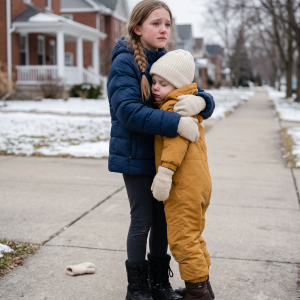
The paramedic examined Sophie and decided she needed the hospital. Emma followed them toward the door, then stopped in front of me.
“Did you come for her?”
“For both of you.”
She took hold of my sleeve, and I stayed beside her while the caseworker explained where we were going.
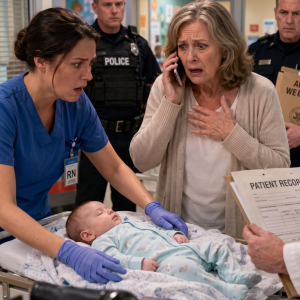
At the hospital, Sophie was treated for pneumonia and dehydration. Rebecca arrived after speaking with the authorities. The girls would remain under county protection while emergency placement and custody were addressed.
“Could they stay with me?” I asked.
“You can ask to be assessed,” she said. “Your connection to Caroline matters. It doesn’t replace the checks.”
“Then tell me what to do.”
That evening, Denise called from the airport.
“You had no right to make us look like criminals. Emma’s dramatic, and Sophie was fine when we left.”
“Sophie’s in the hospital.”
“For a cough? You people will do anything to make a point.”
“They were alone, Denise.”
“Emma’s responsible. She practically raises that child herself.”
I looked through the hospital window at Emma sleeping upright beside her sister.
“She’s nine.”
Denise hung up.
The girls couldn’t come home with me that night. They stayed together in an emergency placement after Sophie’s discharge, and I began the assessments, training, and home visits the county required. I visited whenever their caseworker allowed it.
On the first visit, Emma asked whether Denise could come get them.
“The adults handling your case have to decide what’s safe,” I told her. “You don’t have to figure that out.”
“What if she gets mad?”
“Then she can be mad at me.”
Emma studied my face before returning to her coloring. I took the seat beside her and stayed until visiting time ended.
PART 2 — A HOUSE WITH THE LIGHTS ON

Several weeks later, my home was approved for placement. I had spare bedrooms, but the girls chose rooms beside each other, and Sophie asked whether their doors could stay open. Emma wanted to know where we kept bread.
At dinner, I showed her the pantry.
“You can have something from here whenever you’re hungry.”
“Even after bedtime?”
“If you’re hungry after bedtime, tell me. We’ll get you something.”
“What if you’re asleep?”
“You can wake me.”
She nodded, though bread continued appearing beneath her pillow for a while. Their therapist advised me to keep offering food without turning each hidden roll into a conversation. I learned that a stocked pantry wasn’t enough; Emma needed time to discover it would still be stocked tomorrow.
Sophie startled when doors shut loudly. Emma apologized for spilled milk and asked permission to use clean towels. I began announcing when I left a room, and I stopped taking calls through dinner.
One stormy evening, the power failed. I found them together on the hallway floor, Sophie pressed against Emma’s shoulder.
“The whole street’s out,” I said, lowering myself beside them. “We have flashlights. Want to help me check the kitchen?”
Sophie shook her head. I pointed my flashlight at the wall and made a rabbit with my hand.
“This one has an ear problem.”
Emma glanced up. “That’s your thumb.”
“Well, that explains it.”
Sophie giggled, and I tried another shape. By the time the lights returned, they were arguing over whether my dog looked more like a turkey.
THE WORD I WASN’T EXPECTING
We built a small playhouse in the backyard that spring. A carpenter handled the structure, leaving us the painting and enough uneven trim to feel useful. Emma insisted on white walls because Caroline had drawn a white cottage in one of her pictures.
When Emma knocked a paint bucket against my shoes, she froze.
“I’m sorry. I can clean it. Please don’t—”
She stopped speaking and stared at the spreading puddle.
I set down my brush. “Are you hurt?”
She shook her head.
“Okay. Let’s keep Sophie out of it, and we’ll get some rags.”
Emma didn’t move until I handed her one. We cleaned the spill together, and I put a dab of paint on my own nose after Sophie said I already looked ridiculous.
Emma laughed, then leaned against me.
“Dad, you missed some.”
She pointed at my shoe as though nothing unusual had happened. I bent down and wiped it, giving her time to decide whether she wanted to say the word again.
That afternoon, she did.
The following week, a local news website published Denise’s interview.
“Widowed Executive Uses Fortune to Take Sisters From Family.”
She described Caroline’s support as a promise to help her raise her nieces. She claimed I had arrived demanding possession of them, and the article included a photograph of me walking beside Sophie’s hospital stretcher.
My company’s communications director called before breakfast. By noon, the board wanted a meeting.
“We need you to step away from this situation until it’s resolved,” one director told me.
“What does ‘step away’ mean?”
“Let the county place them elsewhere. You’ve become the story.”
“They’ve already been moved enough.”