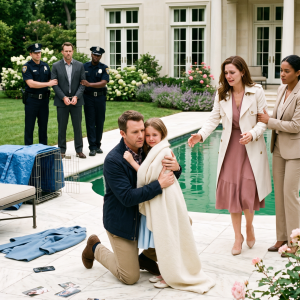
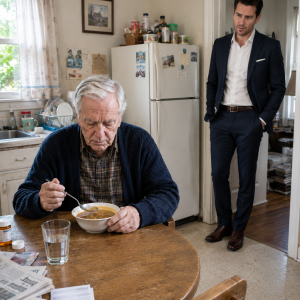
Daniel glanced at Patricia, and that single glance revealed how they had spent the past three days—quietly confirming each other’s belief that none of this mattered.
“She offered to help,” he said.
“No, she offered to care for the twins.”
Patricia placed her glass on the coffee table.
“Your mother is staying in your house and eating your food. I don’t see why asking her to contribute is such an insult.”
I stared at her.
My mother had brought groceries when she arrived. She had also tucked two hundred dollars into the twins’ college jars, although I had repeatedly told her to keep her money.
More importantly, the house was not “ours” in the way Patricia assumed. Every mortgage payment had come from my income. Daniel contributed occasionally, but his earnings usually disappeared into expensive hobbies, dinners with clients, and the image of success he worked hard to display.
For seven years, I had let people believe our lifestyle was the result of Daniel’s financial judgment. I had never corrected Patricia when she praised her son for buying our house, arranging our vacations, or helping with her private medical bills.
It had seemed unimportant who received the credit.
Now I understood what my silence had purchased.
It had purchased Daniel’s entitlement and Patricia’s contempt.
“My mother has bruises on her arm,” I said. “How did she get them?”
Daniel looked toward the kitchen.
“She’s unsteady sometimes. She probably bumped into a cabinet.”
“She said she fell near the stairs.”
His expression tightened.
The stories did not match, and he knew it.
Patricia lifted one shoulder.
“She became emotional when I asked her to redo the guest room. I may have guided her out of the way when she refused, but I certainly didn’t injure her.”
The word “guided” settled over the room like something sour.
Behind me, Caleb whispered, “Grandma Pat grabbed Grandma Linda.”
Daniel closed his eyes briefly.
Sophie pressed her face against my shoulder.
At that moment, the problem became larger than my mother’s bruises or Daniel’s cowardice. My children had been watching. They had seen one grandmother order the other around, seen their father laugh, and seen a kind woman remain quiet because she feared causing conflict.
If I stayed, I would be teaching them that comfort mattered more than dignity.
I would not allow that lesson to take root.
The Decision at the Door
I returned to the kitchen and turned off the oven. Then I carried my mother’s small suitcase downstairs from the guest room.
“Claire, what are you doing?” Mom asked.
“We’re leaving.”
Her first instinct, as always, was to worry about everyone except herself.
“Sweetheart, please don’t make this worse on my account.”
I stopped in front of her.
“You didn’t make this worse. They did.”
I helped her into her coat, gathered the twins’ overnight bags, and slipped their shoes onto their feet. I had almost reached the front door when Patricia stepped into the hallway.
“Linda hasn’t finished dinner.”
Not once had she asked whether my mother needed medical attention. She had not asked why the twins were upset or why Sophie had been crying. She cared only that the roast remained unfinished and Daniel’s shirts were still hanging beside the pantry.
“She isn’t your employee,” I said.
“She came to help this family.”
“She came to help me. She did not come here to serve you.”
Daniel moved between me and the door.
“Claire, you’re exhausted. Sit down, and we’ll talk after everyone calms down.”
That sentence might once have worked. Daniel often used calmness as if it belonged exclusively to him, suggesting that any woman who objected to his behavior had surrendered to emotion.
This time, I heard the strategy clearly.
“Move.”
His eyes narrowed.
“You’re not taking my children anywhere.”
I did not argue with him in front of the twins. I took out my phone and sent a message to my attorney, then opened the financial-management application connected to the household accounts.
I removed Daniel as an authorized user from two cards held solely in my name. I canceled the luxury car service he used for client dinners, ended the country-club payment scheduled for the following week, and disabled access to the business account from which he had been paying many of his personal expenses.
The electricity remained on. The water remained on. I was angry, not reckless.
But the privileges I had quietly financed were finished.
Daniel’s phone began vibrating with notifications.
“What are you doing?”
“Separating necessities from luxuries.”
Patricia’s face reddened.
“You cannot punish my son because your mother is overly sensitive.”
I looked at Daniel, waiting for him to defend the woman who had sacrificed nearly everything to give me a future.
He remained silent.
That silence became his answer.
The House Across the Street

We stepped outside into the pale afternoon sunlight. Mom leaned on my arm, Sophie held my hand, and Caleb pulled his little suitcase behind him.