The Woman Who Chose the Truth

An Unexpected Saturday Morning
The morning my mother-in-law discovered that her son had walked away from our family began with blueberry pancakes, a basket of unfolded laundry, and the familiar sound of my five-year-old son searching beneath the living room furniture for a missing toy truck.
It was a beautiful September morning in Lancaster, Pennsylvania, and through the open kitchen windows came the gentle fragrance of freshly cut grass. For the first time in weeks, I had allowed myself to enjoy a Saturday without thinking too much about the unpaid bills tucked inside my desk drawer or the unanswered messages on my phone.
Then the doorbell rang.
Standing on the front porch was my seventy-three-year-old mother-in-law, Margaret Bennett, holding a large canvas bag filled with presents for her grandchildren. Her silver hair was neatly arranged, and she wore the pale blue cardigan I had given her for Mother’s Day two years earlier.
“I thought I’d surprise my favorite little people,” she announced, smiling as she stepped inside.
Before I could answer, eight-year-old Abigail came racing down the hallway, followed closely by her younger brother, Oliver, whose enthusiasm nearly sent him tumbling over his own feet.
“Grandma! You came!”
Margaret bent forward to embrace them, laughing as Oliver wrapped his arms around her legs and Abigail began telling her about a spelling test she had taken the previous afternoon.
For several minutes, everything felt wonderfully ordinary, almost like the Saturdays we had enjoyed before my marriage began falling apart.
Then Margaret straightened and glanced toward the narrow wooden bench beside the front door.
There were three pairs of everyday shoes beneath it, three jackets hanging above it, and an empty space where her son’s brown leather jacket had once remained throughout the cooler months.
“Where’s Andrew?” she asked.
I busied myself with the canvas bag she had brought.
“He’s working this morning. Things have been pretty hectic lately.”
Margaret looked at me with mild surprise.
“On a Saturday again?”
“Unfortunately.”
She studied the hallway for another moment before following the children into the kitchen.
I had become remarkably skilled at answering questions about my husband without actually providing any information. Over the telephone, it had been relatively easy to explain his absence with stories about demanding clients, unexpected meetings, and business assignments that required him to spend several nights away.
But having Margaret inside our house was different.
She could see the empty spaces I had spent six months learning not to notice.
At breakfast, she listened patiently while Oliver explained why dinosaurs would make excellent pets, occasionally asking questions that encouraged him to elaborate on his increasingly complicated theory. Abigail sat beside her grandmother, carefully spreading butter over her pancakes.
I was pouring another cup of coffee when Margaret looked toward the unused chair at the opposite end of the table.
“Rebecca, when was the last time Andrew spent a night here?”
The coffee spilled over the rim of her cup.
I reached quickly for a dishcloth, hoping the small accident would give me enough time to think of something convincing.
Before I could speak, Abigail quietly put down her fork.
“Daddy doesn’t live here anymore, Grandma.”
Margaret turned toward her.
“What makes you say that, sweetheart?”
My daughter glanced at me before answering.
“Mom says he’s busy, but he’s been busy for a really long time. I think he has another house now.”
There was no anger in her voice, only the quiet uncertainty of a little girl who had spent months trying to understand something the adults around her refused to explain.
Margaret reached across the table and gently squeezed Abigail’s hand.
“Thank you for telling me, honey.”
She didn’t question her further, nor did she immediately demand an explanation from me. Instead, she asked Oliver whether he wanted another pancake and continued listening to his dinosaur story.
But something had changed between us, and I knew that before the day was over, I would finally have to tell her everything.
The Suitcase on Our Bed
Six months earlier, Andrew had returned home from his job as a commercial lighting sales representative with an expression I initially mistook for exhaustion.
We had been married for eleven years, and although our relationship had become less affectionate over time, I had always believed we were experiencing the ordinary pressures of raising children, maintaining a household, and trying to build a comfortable future.
I worked as an administrative coordinator at a local dental practice, and most evenings consisted of preparing dinner, checking homework, washing clothes, and persuading Oliver that brushing his teeth was not a personal injustice.
Andrew often arrived after dinner, explaining that his company was expanding into new markets and that his responsibilities had increased considerably.
That particular evening, he remained standing beside the kitchen counter.
“I don’t think I can keep doing this, Rebecca.”
I assumed he meant his job.
“Maybe you should take a few days off. You’ve hardly had a weekend to yourself lately.”
He looked toward the living room, where the children were watching a cartoon.
“I’m talking about us. This house, this marriage, everything.”
I remember the peculiar sensation of hearing words I understood individually but could not quite comprehend when they were placed together.
I suggested we talk after the children went to bed, but Andrew said he needed time to think.
The following morning, after I had taken Abigail and Oliver to school, I returned home to collect a folder I had forgotten.
Upstairs, I found Andrew packing a suitcase.
Several empty hangers swung gently inside his closet, and his toiletries were already missing from the bathroom counter.
“Andrew, what are you doing?”
He continued folding a shirt before finally looking at me.
“I’ve met somebody.”
Her name was Vanessa Carter, and she worked in the marketing department of his company.
According to Andrew, their relationship had begun several months earlier, and he had decided that he wanted to build a different life with her.
He spoke about personal happiness and the importance of being honest with himself, while I stood beside the dresser wondering how I was supposed to explain his departure to two children who still believed their father would be home for dinner.
“What about Abigail and Oliver?” I asked.
“I’m not leaving them. I’m leaving the marriage.”
“Then when are you going to see them?”
“We’ll figure something out.”
“They’re going to ask me where you are tonight.”
He closed his suitcase.
“Just tell them I’m away for work until we get everything sorted out.”
I wanted him to sit down, to acknowledge what was happening, and to recognize that the decision he had made would affect more than his own happiness.
Instead, he picked up his luggage and walked downstairs.
From the bedroom window, I watched him place the suitcase inside his car and reverse out of the driveway.
There were still two mugs beside the kitchen sink, his favorite cereal remained in the pantry, and a school photograph of Abigail was attached to the refrigerator with a magnet he had purchased during a family vacation.
Nothing around me seemed prepared for the fact that our marriage had just changed forever.
Neither was I.
Learning to Carry Everything Alone
During the first few weeks, Andrew occasionally answered my messages and made vague promises about visiting the children.
Whenever he suggested a Saturday afternoon together, Abigail would begin planning what she wanted to show him, while Oliver would gather several of his favorite toys near the front door.
More often than not, Andrew canceled.
Eventually, I stopped telling the children about his plans until I knew he was actually coming.
I became responsible for every school appointment, every grocery trip, every unexpected expense, and every difficult conversation that arose when the children noticed another family doing something with their father.
At night, after putting them to bed, I sat at the kitchen table with my calculator and a collection of envelopes, moving money between expenses and hoping nothing else would require immediate attention.
The person I found most difficult to face was Margaret.
Her husband, Robert, had passed away three years earlier, and Andrew was her only child. She spoke proudly about his accomplishments, kept photographs from his childhood throughout her house, and never missed an opportunity to tell people how hard he had worked to establish his career.
I couldn’t bear the thought of bringing more sadness into her life.
Whenever she called, I explained that Andrew was traveling or spending extra hours at the office.
Sometimes she asked why he hadn’t returned her calls, and I would suggest that he was probably overwhelmed.
The excuses became increasingly uncomfortable, but I continued making them because admitting the truth meant acknowledging that the family I had spent eleven years building was no longer what I had believed it to be.
Meanwhile, my children were quietly drawing their own conclusions.
One evening, while I was helping Abigail organize her school supplies, she asked whether people could be too busy to remember someone they loved.
I told her that grown-ups sometimes had complicated responsibilities, but that none of those responsibilities changed how important she was.
She nodded, although I could tell my answer had not entirely satisfied her.
Related Posts

After I Was Seriously Injured on a Military Mission, the Doctor Told My Husband and Mother-in-Law That I Might Not Survive the Next 72 Hours. Thinking I Was Unconscious, My Mother-in-Law Smiled and Said, “Perfect! Her House Will Finally Be Mine!” My Husband Laughed, “And I’ll Finally Be Free to Marry My Mistress!” I Kept My Eyes Closed Until They Left, Then Called My Father and Whispered, “Dad, It’s Time.” That Evening, My Husband Returned With a Notary and Papers He Wanted Me to Sign — Completely Unaware of What My Father Had Spent the Past 18 Months Preparing for This Very Moment…
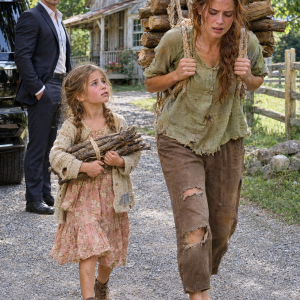
I Returned to My Hometown After 20 Years to Sign a $12 Million Deal and Found the Woman I Once Promised to Marry Walking Barefoot Along a Mountain Road, Carrying a Heavy Bundle of Firewood on Her Back. Beside Her, a 4-Year-Old Girl Hugged a Handful of Sticks and Asked, “Mommy, Do You Think Daddy Will Ever Come Home?” When I Discovered That My Wealthy Business Partner Was Responsible for Their Hardship, I Canceled the Deal and Ordered a Full Investigation—but the Moment I Saw the Tiny Crescent-Shaped Birthmark Behind That Little Girl’s Ear, I Knew There Was One Question I Could No Longer Run Away From…

“Finally, We’re Finished! Sabrina, This Mansion Is Yours Now!” My Husband Declared, Handing His Mistress the Keys While His Family Celebrated With Champagne. My Suitcase Lay Open on the Driveway, My Clothes Scattered Everywhere. They Thought I’d Signed Away Everything. But Three Hours Earlier, I’d Inherited $3.8 Billion and Learned Who Really Owned Their Precious Mansion.

At 3:20 AM, a Police Sergeant Called Me: “Ma’am, Your 9-Year-Old Daughter Just Walked Three Miles Through a Blizzard, Pushing a Shopping Cart With Two Little Boys Inside.” When I Arrived, She Whispered, “Mom, I Couldn’t Let Them Take the Babies Away.” She Pulled a Soaked Envelope From Her Shoe. But When a Phone Hidden Beneath the Children’s Blanket Suddenly Rang, the Sergeant Looked at the Screen, Turned to Me, and Said, “Whatever You Do, Don’t Call Your Ex-Husband”